Is
there such a thing as a perfect bluegrass album? I guess that all
depends on where you stand on the eternal “what is bluegrass, anyway”
debate, and which vocal or instrumental styles are appropriate, and all
that nonsense.
But I still hold that my own standard of perfection works without
regard to those arguments. It’s a fairly simple standard: great songs,
stellar performances, and transparent audio quality.
By that standard, It’s About Tyme, released today by Russell Moore & IIIrd Tyme Out
is about as close to perfect as I can imagine. It represents the finest
work to date by this iconic band, fronted by one of the most
distinctive vocalists our music has ever borne. And I don’t think anyone
will argue that these guys aren’t smack dab in the mainstream of
contemporary bluegrass.
From his breakout work with Doyle Lawson – and even before with
Southern Connection – Moore has done bluegrass proud, as he does here on
13 new tracks (plus a Wayne Benson instrumental). It’s also a great
introduction to the new band, being their first album since the
departure of longstanding members Steve Dilling and Edgar Loudermilk.
Both of them are now working with other touring groups, with Keith
McKinnon and Blake Johnson stepping in to IIIrd Tyme Out.
To say Madisen Ward & the Mama Bear
have a great gimmick stretches the boundaries of understatement -- a
guy in his late twenties harmonizing and switching back and forth on
lead guitar with his mother in her early sixties is likely to get press
even if their music was little more than adequate. However, the debut
album from the duo, 2015's Skeleton Crew,
confirms that this pair get over honestly on their talent, showing
impressive skills as vocalists, instrumentalists, and songwriters. Madisen Ward
gets top billing here for good reason: his rich but flexible voice
boasts a wealth of dramatic power, and he absolutely knows how to sell
these songs, spinning his literate stories of Southern life with the
skill of a gifted actor. But if Madisen Ward is the star of the show, Ruth Ward
(aka Mama Bear) is a more than worthy collaborator: her high, sweet,
supporting vocals complement her son's very well, and while the guitar
work here is subtle, the two players weave their instrumental lines
around one another with artful intelligence, giving the melodies a
strength that doesn't get in the way of their folkie simplicity. And
while the duo are clearly informed by blues, folk, and gospel sounds,
they don't land comfortably in any particular camp. These melodies may
be elemental, but they're hardly simple; they're a fine match for lyrics
which deal with the stuff of ordinary lives with compassion and
perception, ranging from love and war to pie and Cherry Coke. Jimmy Abbiss'
production captures the interplay between the musicians very well,
focusing on the acoustic space of the voices and guitars, and providing
accompaniment that enhances the songs rather than weighing them down. If
it takes the family band angle to get Madisen Ward & the Mama Bear
into the marketplace, let it be said that far more intrusive gimmicks
have been used in the service of far less satisfying music, and Skeleton Crew is a debut with heart, soul, and fine songs to spare.
(Now, how does a nice Irish boy come up with an Americana song that sounds like a slowed-down version of a traditional chain gang song, and with the lyrics that could easily come out of a mountain man. Go figure. But eff me! This song! Jasmine)
The recipient of much hype and praise for his breakthrough single "Take Me to Church," Ireland's Hozier
does plenty to back it up on his self-titled debut LP. A soulful voice
and a brooding mystique can get you a long way but fortunately, most of
the material here is well-written enough to warrant a deeper look at the
young artist many have labeled an old soul. Like fellow Irishman Van Morrison did decades before, Hozier (Andrew Hozier-Byrne) draws on the soul and R&B of Jackie Wilson and runs it through the mystery white-boy filter of Jeff Buckley, adding a touch of Bon Iver's rural indie aesthetic to mix into his own dark cocktail. Moodcraft and vibe are where Hozier
is at his most effective and he hits his mark on the eerie,
midnight-hour blues of "Angel of Small Death & the Codeine Scene"
with its subtle layers of creepy choir boy and gospel vocals. It's the
logical sequel to his equally haunting "Take Me to Church," which leads
off this set. Coming in at 53 minutes and 13 tracks, the record is
probably a bit too lengthy. The album's best tracks, like the warm,
laid-back "Someone New" and the grandiose shuffling of "From Eden" are
all front loaded in the first half, while side two feels a bit weighed
down with a few too many slow, contemplative pieces. When you're dealing
with the kind of spells Hozier
is casting, it's always best to leave them wanting more. Still, the
dirge blues of "It Will Come Back," with its dirty fiddle and electric
guitar pairing, manages to rattle the church pews enough to help anchor
the back half. In spite of its extra padding and occasional foibles,
it's a strong debut and Hozier
is far more commanding and convincing than so many other blues-inspired
young turks lurking conspicuously in the alleyways of indiedom.
(And I thought the "train" theme was dead and gone... Jasmine)
Ever since he broke through to nationwide recognition with X's outstanding 1980 debut, Los Angeles, John Doe has been one of rock's greatest triple threats. Doe is a brilliant singer with a gift for writing great melodies, and he's an intelligent, evocative lyricist. Nearly all of Doe's albums find him displaying these talents in equal measure, but 2016's The Westerner is an uncommonly strong set of songs that that ranks with his finest work. Doe
has rarely meshed the depth of his material with the power of his
performances as well as he does here. While it isn't a thematically
linked concept album, The Westerner's ten songs are all rooted in the American West, and there's a strength and resonant consistency to their sound and feel. Doe was a poet before he became a lyricist, and there's a poetic sensibility to the best tracks on The Westerner
that sets them apart from much of his catalog. ("Sweet Reward,"
"Sunlight," and "The Other Shoe" are particularly effective in their
impressionistic wordplay.) Doe co-produced The Westerner with Dave Way and Howe Gelb, and Gelb's influence is especially strongly felt on these sessions. The results don't particularly resemble Gelb's work with Giant Sand, but the same dusty mood and sunburnt tone hovers over this music, and it suits the tunes perfectly. And Doe
brings a welcome compassion and insight to these stories of people
struggling to make sense of their lives under the unrelenting glare of
the sun and sand. Doe has always been one of rock's better storytellers, but The Westerner has a degree of heart, soul, and wisdom uncommon even for his work. Muscular but graceful, The Westerner is as effective as anything Doe has released in his solo career. It confirms that at the age of 63, he
hasn't run out of ideas and is not afraid to challenge himself.
The first thing you notice about Parker Millsap
is the immediacy of his delivery. His fiery take on Americana -- a
genre more than happy to wallow in its time-tested tropes -- somehow
manages to come across as fresh without his having to reinvent the
wheel. The bluesy guitar, harmonica, fiddle, and early rock rhythms
offer a familiar enough framework, but the raspy intensity of his high
tenor vocals and the electricity of his craft put him in a league of his
own on his third LP, The Very Last Day. Millsap
emerged nationally in 2014 with a self-titled second LP that earned
plenty of critical accolades and netted him prime support slots with
roots rock veterans like Old Crow Medicine Show and Jason Isbell.
Raised a Pentecostal Christian in the small town of Purcell, Oklahoma,
he attacks themes of belief and sin with a wry vigor and will cross
whatever lines he pleases to tell his tales. His anxious energy spills
out from the get-go with the frenzied opener "Hades Pleads," a
razor-sharp rocker confronting the Greek god of the underworld. Quickly
switching gears, Millsap channels a bit of Sam Cooke
in the soulful crooning of "Pining," then pares down further on the
powerful "Heaven Sent," which takes the form of a conversation between a
gay son coming out to his preacher father. Recalling the Louvin Brothers, another American act who famously melded religion with nuclear apocalypse on their 1952 single "The Great Atomic Power," Millsap's
gospel-blues title track takes a more cathartic approach as he bellows
"Ain't no reason being so afraid/Yeah you can try to hide but it's gonna
get you anyway!" The confidence in his approach is infectious, and in
spite of his occasionally weighty subjects, The Very Last Day is an entirely energizing listen.
As
a founding member of the Carolina Chocolate Drops, Dom Flemons
specialised in reviving pre-war African-American string-band styles, and
now expands his range to include jazz, blues and R&B. His former
colleague Rhiannon Giddens has released an adventurous album reworking
great American songs, but Flemons sounds as if he’s sitting on the front
porch enjoying himself. This is a cheerfully varied set, on which he
switches between guitar, harmonica, banjo and percussion, with help from
equally classy musicians including multi-instrumentalist Guy Davis
(though sadly not Martin Simpson, with whom he toured last year). There
are some intriguing tracks here, including a revival of Native American
fiddle music on Sonoran Church Two Step and the swinging weepie Have I
Been Away Too Long?, now dressed up with electric guitar and saxophone.
His own songs range from a good-natured tribute to New Orleans jazz to
pleasantly unremarkable folk ballads.
Whitney Rose is a Canadian country singer and songwriter in love with the countrypolitan era. For her, the Nashville of Peggy Lee, Patsy Cline, Dolly Parton, and new traditionalists Keith Whitley and Patty Loveless still exists. Her acclaimed self-titled 2012 debut displayed that to some degree, but Heartbreaker of the Year proves it definitively. It was produced by the Mavericks' Raul Malo, who also sings and plays on it, accompanied by some of his bandmates, as well as Canadian guitar slinger Nichol Robertson and others. What's most interesting is Rose's singing voice: it sounds thoroughly contemporary, even as it recalls Lee's sultry pop approach, Dolly Parton's sincerity, and Tammy Wynette's confidence. Speaking of Wynette, the cover here of Phil Spector's "Be My Baby" is thoroughly retooled, with Malo and Rose recalling the late queen's duets with George Jones. The other remake is an understated reading of Hank Williams' "There's a Tear in My Beer." The rest are Rose's
songs, and they shine. The bluesy title track, with its nocturnal
Telecaster twang and finger-snapping rhythm, can only be called "country
noir." "Little Piece of You," with its upright piano, whining pedal
steel, and tight guitar shuffle, lies right on the seam between
countrypolitan and vintage girl group pop. "The Last Party" is a honky
tonk weeper, with backing vocals from Malo. The ache in the lyric is underscored by the simmering passion in Rose's
delivery. She has plenty of sass too, as uptempo tracks "Lasso" and
"The Devil Borrowed My Boots" attest. The former melds vintage country
& western and surf while the latter has a vamp that recalls "Harper
Valley PTA," but has more shimmy than swagger. Heartbreaker of the Year reveals that Rose
can craft killer hooks, deliver slippery lyric turns, and create
provocative juxtapositions in her arrangements to accommodate her voice.
On this album she extends the boundaries of classic country music
without erasing its boundaries or sacrificing it to the realm of
nostalgia. Heartbreaker of the Year is one of 2015's most welcome surprises.
The Steep Canyon Rangers
have spent much of their career walking a fine line between traditional
bluegrass and acoustic music with a strong contemporary pop and country
influence, and they've blurred the lines between the two sides of their
musical personality more than ever before on 2015's Radio. One of the key differences on Radio is the addition of a sixth Ranger, percussionist Mike Ashworth,
and even though his kit primarily consists of just a box played with
brushes, his steady pulse subtly but clearly points to the melodic hooks
in numbers like "Simple Is Me," "Blow Me Away," "Long Summer," and the
title tune, and without having to plug into an amp, the Rangers
set themselves apart from bluegrass acts who prefer to pretend it's
still the early '50s. At the same time, these musicians are remarkably
skilled, both as individuals and as an ensemble, and when they do dig
into their bluegrass roots, they do so with a clear love and respect for
the form, and with "Blue Velvet Rain," "Looking Glass," and "When the
Well Runs Dry" they show just how fresh they can sound while working
within a tried-and-true framework. It's a thrill to hear a band this
good playing together, and Ashworth, Mike Guggino (mandolin), Charles R. Humphrey III (bass), Woody Platt (guitar), Nicky Sanders (fiddle), and Graham Sharp
(banjo) are as gifted as any young band in bluegrass, with each member
earning his stripes when stepping up for a solo, and coming together
with outstanding ensemble work and spot-on harmonies. Produced by Jerry Douglas, who captures the group's musical interplay beautifully and contributes some fine Dobro work as well, Radio
is an outstanding album from one of the most exciting new bands in
bluegrass, and if you know them best for their work with a certain
talented banjo-playing comedian and actor, you owe it to yourself to
find out how much they can do on their own.
Upland Stories is a genuinely fantastic album. It finds Fulks in a reflective, personal state, one that produces some beautiful and unforgettable listening experiences. And one of those experiences is wrapped up in a story about Aunt Peg’s latest love interest, a man who, against all common sense, “didn’t like the Scruggs style” when it came to banjos. Regardless of who this new man is, Fulks tells the story in his signature endearing manner, and will likely lead you to hitting repeat to listen to it all over again (and again … and again).
(Religious music, but who am I to judge. They've got it. Jasmine)
Willis, VA -- Mountain Fever Records is proud to announce the release
of the brand new album from International Bluegrass Music Association's
(IBMA) Emerging Artist of the Year nominee, Mountain Faith. That Which Matters is available everywhere today!
Even late in the afternoon when the shadow of Cowee Mountain
stretches across the family tire shop, passersby can catch the bright
notes of Appalachian bluegrass drifting from the back room of the
service station where Mountain Faith – the SPBGMA Bluegrass Music Awards
nominated band from Sylva, North Carolina – rehearses between
customers. Everybody’s there: Sam McMahan keeping time on bass, Summer
McMahan playing the fiddle and singing lead and harmony, Brayden McMahan
plucking the banjo and singing harmony, Luke Dotson strumming the
guitar and singing lead and harmony, and Cory Piatt picking the
mandolin.
Although the band has been performing together since 2000, it's only
been in the last few years that the music industry has begun taking note
of the talented ensemble. In fact, earlier this month, Summer was
awarded the IBMA's Momentum Award in the Vocalist category. While
bluegrass fans may have been on the Mountain Faith "bandwagon" for a few
years now, the rest of the country began taking notice of the family
band through regular appearances as contestants on NBC television's
popular show, America's Got Talent, making it through to the semi-finals
in New York City.
Mountain Faith is winning fans inside the industry including Knee
Deep in Bluegrass radio host Cindy Baucom who said, "After spending 30
years in radio and a lifetime around Bluegrass music, Mountain Faith is
the kind of group I love to see emerge. I choose songs for radio based
on performance quality, production quality and how it fits the
genre...and I have no problem including Mountain Faith because they have
all those things going for them. I think singer/fiddler, Summer McMahan
is poised to take her music as far as she wants to ...and I will gladly
be in her corner every step of the way!"
Band members include Sam McMahan on bass, Luke Dotson on guitar along
with lead and harmony vocals, new member Cory Piatt on mandolin, Summer
McMahan on fiddle along with lead and harmony vocals, and Brayden
McMahan on banjo and harmony vocals. Summer's strong vocals are a
hallmark of the band, putting her squarely in the middle of some of
today's powerhouse young female bluegrass vocalists on the rise. That Which Matters has already drawn excellent reviews from
radio and media. The first single, "Emily (It's Love)" was released
earlier this year and John Lawless said, "...here Summer McMahan sings
it solo with a slurry, slippery style that is very modern while
remaining true to her bluegrass roots. Simply brilliant." The same could
be said about every track on this positive, gospel-tinged project. The
album showcases the vocal talents of the entire band with Summer singing
most all the lead vocals supported by beautiful, almost haunting in
places, harmony vocals. There are plenty of hot licks and high lonesome
harmonies to make this a favorite among bluegrass fans while the song
selection is carefully thought out with the lead track, "Someone Prayed"
setting the tone for a listening experience full of songs of hope,
love, celebration and praise. And even though it would be tough to
choose just one favorite, the closing track, "There Is A God" is surely a
top contender.
Kathy Kallick has held a predominate bluegrass band in Northern
California for a long time. Her distinctive voice brings to mind great
female singers of the past like Wilma Lee Leary (aka Cooper). Her band
is top flight and really delivers the goods. Annie Staninec plays fiery
fiddle. Tom Bekeny’s mandolin has that classic woody drive in its
attack. Cary Black lays down a fine underpinning to the proceedings on
bass. Greg Booth’s banjo and resonator guitar are a joy to hear and
Kallick’s guitar drives the rhythm. They all shine on the instrumental
reading of “Don’t Let Your Deal Go Down.” And unlike some bands, they
all sing.
There are some great new original songs such as “So
Danged Lonesome” and “Snowflakes.” Staninec lays down a very driving
version of the old fiddle tune “Roscoe,” and the whole band jumps into
the fray making the old tune spin like a whirling dervish. It’s
refreshing to hear a band reach back into the tradition for material.
They also dip into the past for great songs from Mac Martin, “I’ll
Forgive You” and the old mountain standard “Banjo Picking Girl” that
they attribute to Lily May Ledford of the original Coon Creek Girls.
Annie Staninec sings lead on this cut and “Sally Ann.” They do reach out
for a Richard Thompson number, “Tear Stained Letter.” The great trio
really adds to the original “Longest Day Of The Year.”
This is
truly a band effort, and their sound is traditional and unique. This
makes for a very refreshing outing and a fine recording worthy of your
attention. With seven originals on this project, it makes Kallick a
triple-threat as singer, songwriter, and masterful band leader. If you
love traditional bluegrass, don’t miss this gem.
Listening to Donna Ulisse's new album "Hard Cry Moon" is like
stepping into a 3-D diary. As soon as the music starts with "Black
Train," we find ourselves waiting by the railway tracks with a forlorn
wife bidding farewell to her erring husband, leaving behind the lights
of home to begin life again in another zip code. Then we get to step
into the thrilling pages of a blossoming romance ("We're Gonna Find a
Preacher") and then spend an idyllic afternoon sitting under the shade
of Papa's tree ("Papa's Garden"). Never one who can be faulted for
writing two dimensional narratives, Ulisse has a way of engaging our
ears, our eyes, and our hearts conterminously with her tales, often spun
with utmost perspicuity and with heartfelt realism. After a series of
bluegrass Gospel records and a country covers album, Ulisse has returned
to her first love: bluegrass music. As she succinctly puts it best in
the song "It Could Have Been the Mandolin:" "It could have been the mandolin, 'cause bluegrass always stirs my soul."
Though Ulisse is bluegrass music's
treasure, she did not start off singing bluegrass. In 1991, her first
dabble in commercial music was with country when Atlantic Nashville
Records released one of the most criminally overlooked efforts "Trouble
at the Door." Though now out of print, the record contains some of
country music's finest gems including "Things Are Mostly Fine," "Legend
in My Heart" and "My Broken Heart's Breaking All Over Town." Six years
after being disillusioned by Nashville, Ulisse decided to listen to her
heart's calling. Teaming up with her husband Rick Stanley, they began
dabbling in their first foray into bluegrass music with the release of
2007's "When I Look Back." And when the bluegrass community heard of
Stanley's involvement, they began warming up to Ulisse. This is because
Rick Stanley is the cousin of bluegrass immortals Ralph and Carter
Stanley. Ever since, Ulisse has been a bluegrass music's mainstay,
perennially churning out some of the finest music for the genre.
Save for the traditional "Whispering Pines," all of the tracks on
"Hard Cry Moon," come by way of Ulisse's pen, which she sometimes shares
with her hubby Stanley, Marc Rossi, and Jerry Salley. While many
bluegrass records pay too much attention to the virtuoso playings at the
expense of the songs' melodic structures, this is not the case here.
"It Could Have Been the Mandolin" and "Ain't that a Pity" are
ear-grabbing masterpieces. They are catchy romps with infectious
choruses that make us want to sing along to and tap our feet to their
incessant and driving rhythms. "The River's Runnin' Free" is to be
singled out for Rossi and Ulisse's attention paid to details. With
picturesque words that doesn't just describe but paints with vivid
images, "The River's Running Free" describes a baptism service by a
river. Though it recalls Carrie Underwood's #1 smash "Something in the
Water," Ulisse's vivid depictions win by a wide margin.
The ballads here are soul churners and they are not to
be missed. The title cut "Hard Cry Moon" is an emotionally tortured
piece about a broken heart. While "As Long You're Together" is not an
airy-eyed fairy tale romantic flick. Rather, it's about a love that
still chooses to persevere after all the warts and pains. In "Papa's
Garden," Ulisse not only takes us for a tour around her papa's orchard,
she draws out from the garden heart enriching metaphors. Don't let the
gentle strums of "I'll Sleep in Peace Tonight" side track us from the
song's mammoth message of how Jesus Christ renews us each day with His
grace. In short, do your soul, your ears, and your eyes some good by
giving this disc a spin. Our souls and our imaginations are so much
richer as a result of "Hard Cry Moon."
The Bumper Jacksons’ six band members bring a music shop with them as
they feature instruments like a baby trombone, mouth horn, banjo and
washboard. A “suitcase contraption” is also a credited instrument on
their new release, Too Big World. Too Big World starts with “Coffee Mama,” and it certainly
wakes you up to the rest of the album. From the start, the Bumper
Jacksons jumps into their jazzy, 1930s, big band tone. It sets the
scene, but is the song really about coffee (wink, wink)? This is a sexy,
fun, truthful album.
The first two songs introduce us to the variety of vocals belonging
to the Bumper Jacksons. While “Coffee Mama” is sung by Chris Ousley,
track two (“Satan Your Kingdom Must Come Down”) is brought to us by Jess
Eliot Myhre. The varying sounds, yet consistency in themes throughout
makes this a perfect end of summer, back porch listen-with-a-lemonade
album. It’s also great “fuel for the road,” as the band says.
None of the 16 tracks should be skipped. Even some of the slower,
more somber tracks like “Adventure Story” and “I Learned I Was Wrong”
are welcomed breaks from the upbeat ones. Both of these songs are
beautifully sung and perfectly pair the band’s lead vocalists.
This is a no frills album, which works wonderfully for the Bumper
Jacksons. It sounds just the way you’d expect to see them live as you
walk down an alley and hear sounds coming from the local bar. You pop in
and see the Bumper Jacksons in the corner of a bar with all of their
instruments, jamming while the whiskey flows. There’s dancing in the
background, and hollering for more as each song ends. This album allows
you to step back in time.
Not a lot of artists would claim both Lucinda Williams and Dinosaur Jr. as influences, but on her second album, 2015's Royal Blue, Lilly Hiatt
genuinely sounds like someone who has both of those artists in regular
rotation, even if she bears little direct resemblance to either. It's a
lot easier to hear how Williams fits into Hiatt's
formula, since they're both women who write songs with an introspective
streak, a big portion of emotional honesty, and a decided country
accent. Williams seems to be more of a kindred spirit, however, than a direct influence on Royal Blue, as Hiatt's
lyrical approach is noticeably more measured, though no less incisive,
and she has a wit and keen intelligence that's all her own (the title
alone makes "Jesus Would Have Let Me Pick the Restaurant" worth hearing,
and the rest of the song is nearly as clever). And no, there's no
guitar work on Royal Blue that's up to a J. Mascis level of towering noise, but for someone traveling the rootsy side of the Nashville songwriting community, it's pretty clear Hiatt isn't afraid of laying in a noisy guitar solo or some carefully modulated feedback, and Beth Finney's electric guitar and Luke Schneider's
pedal steel give this a good, scrappy texture that's a welcome switch
from the spit and polish of most contemporary Nashville productions.
Whether she's sorrowful, confused, or downright angry about her
relationships with various men, Hiatt sounds honest and unafraid on Royal Blue's 12 songs, and she can rock out or lay back with equal conviction. Adam Landry's production does better by the music than it does by Hiatt's
vocals, which are often a bit too deep in the mix, but the loose and
open sound of this material is a step in the right direction, sounding
like a more comfortable fit than the more pared-down tone of 2012's Let Down. Royal Blue makes it clear that Hiatt is a naturally gifted songwriter, and she's getting better at the separate but related art of making records.
Robert Earl Keen
has been playing the Texas singer/songwriter circuit for over three
decades, and as a guy who often favors the acoustic side of the country
and Americana music scenes, it's no kind of surprise that he's crossed
paths with the bluegrass music community, and it certainly makes sense
that he's a fan. What is a bit of a surprise is not that Keen
has decided to cut a bluegrass album, but that the respected tunesmith
has chosen to make it a collection of covers rather than writing a new
set of songs. Happy Prisoner: The Bluegrass Sessions finds Keen and a crew of top-notch pickers (including Danny Barnes, former leader of bluegrass iconoclasts the Bad Livers)
whooping it up on a set of tunes that have become bluegrass standards;
this isn't always bluegrass for purists (which is to say there are drums
on a few tracks and the version of "Hot Corn, Cold Corn" takes serious
liberties with the traditional arrangement), but the fiddles, banjos,
and mandolins keep this rooted within the accepted boundaries of the
genre, and the players certainly do right by the songs. Just as
importantly, Keen
sings these numbers with a genuine enthusiasm and a dash of swagger
that suit his Lone Star attitude, with a small but meaningful helping of
twang (though he dials back the strutting for pathos on numbers like
"East Virginia Blues" and "Long Black Veil"). Lloyd Maines, who has worked with Keen many times over the years, produced and engineered Happy Prisoner,
and he brings a warm, natural sound to these sessions, which sound like
a bunch of pickers circled around a mike in the best of all possible
ways. Some fans of Keen's songwriting might lament the lack of new material on Happy Prisoner, but as a performer he's in great shape here, and he makes the most of his duet spots with Lyle Lovett and Natalie Maines. In his liner notes, Keen writes, "When I listen to music I want the sound to wash over me like a wave," and at its strongest, Happy Prisoner does just that, and it's a worthwhile detour for one of Texas's best songwriters.
It is always a cool thing when an artist who has been in the music business for a long time is suddenly “discovered.” In the bluegrass world, this is hopefully about to happen to Rebekah Long who, through her many talents, is no stranger to some of the most successful folks in the genre.
Long grew up in Lincolnton, Georgia near the famous musical kinfolk The Lewis Family and spent time touring and playing upright bass with Little Roy Lewis and Lizzy Long, Rebekah’s twin sister. She also played bass in Valerie Smith & Liberty Pike.
Rebekah was one of the first students to graduate from the Glenville State College Bluegrass Certificate Program after it was created in 2002. With a BA in Bluegrass Music and a BA in Music Education under her belt, Long immersed herself in the bluegrass business working as a recording engineer, graphic designer, video editor while also playing in various bands.
Collaborating closely with the legendary songwriter Dixie Hall, the late wife of Country Music Hall of Famer Tom T. Hall, Long was the recording engineer and graphic designer for the acclaimed “Daughters of Bluegrass” box set, also adding bass, guitar and vocals to the project.
Now, finally, Long steps in front of the microphone with the appropriately titled album “Here I Am,” a fresh solo take on one of America’s true original genres; bluegrass music with heart and soul.
“Here I Am” is an album filled with wonderful new original songs and some classics redone in the bluegrass style. Produced by the renowned singer-songwriter Donna Ulisse, the album features Long’s distinctive vocals and songwriting brought to life by some of the best musicians in the bluegrass genre.
On “Here I Am,” Long is backed by an all-star cast of session musicians who also record and tour with some of the top acts in the roots music world. The gunslingers that play on this dynamic new album include the International Bluegrass Music Association (IBMA) Banjo Player of the Year Scott Vestal, five-time IBMA Bass Player of the Year Mike Bub, two-time IBMA Mandolin Player of the Year Jesse Brock, Grammy-nominated and IBMA Award winner Dustin Benson on guitar and the Grammy-nominated fiddler and Dobro player Justin Moses. Backing Long up on vocals are producer Ulisse and her husband and band mate Rick Stanley.
Out of the gate comes the rollicking opening song “Ain’t Life Sweet” that Long co-wrote with Ulisse and Stanley. The cut brings to life the everyday tales of those who live out in the country. Unlike many modern-day country acts who could not relate to the vivid imagery in this song, Long grew up in rural Georgia and knows plenty about the matters of this song. When Long sings about Papaw Davis clearing his throat to try and catch the preacher’s eye as he has preached “way past noon” and “it’s suppertime here,” or you hear the tale of Cleetie Mullins passing around a jug of moonshine that she got “from a friend, but we all know where Cleetie’s been, We keep some secrets here,” Long keeps it real.
Other standout songs on “Here I Am” include a soaring version of Cheryl Wheeler’s “I Know This Town,” which may be the break out hit of this album; the creepy and otherworldly murder song “Hairpin Hattie” penned by Long, Ulisse and Stanley; Tom T. Hall’s life-on-the-road story about the injustices of this world called “I Washed My Face in the Morning Dew,” and Long and Ulisse team up again for the beautiful heartbreak song “He’s Never Coming Back Again.” Long and co-writers Ulisse and Stanley also pay tribute to the deceased songwriter and humanitarian Dixie Hall with the upbeat and biographical cut “Sweet Miss Dixie Deen”.
Long also pays tribute to the recently departed Country Music Hall of Famer Merle Haggard on this album. Recorded before Haggard’s death, Long puts a feisty bluegrass spin to his classic song “The Fightin’ Side of Me.” “I've always been a fan of Merle but didn’t really start listening to him until about 10 years ago or so,” said Long. “The Fightin Side of Me” has always been fun and in some ways runs in line with what I believe in. I guess most everybody knows I run along the line of hot about certain things, like a switch.”
Says producer Donna Ulisse, “Rebekah has an X factor that I can’t put into words. She’s a little edgy, like a new puppy!”
For two weeks in 1927, Bristol, Tennessee was the site of a legendary recording session known now as “the big bang of country music.” The sessions launched the careers of The Carter Family and Jimmie Rodgers and reinforced the popularity of Ernest V. “Pop” Stoneman
whose music career was already well established in the recording
industry. Many of the regional musicians who recorded in Bristol did not
go on to fame and fortune, but their contributions to country music are
acknowledged and honored at last in this reimagined tribute project.
The new Orthophonic Victrola
had found an eager audience, and executives were on the search for new
talent. Thanks to Stoneman’s encouragement, Victor producer Ralph Peer found it in the Blue Ridge Mountains, a region that rightly claims its place as a who’s who of American roots music.
“Naturally, anybody who grew up in the South and read books was a fan of Mark Twain,” he said. “Carl sent me the CD.
I was in Bristol, and out of the blue this idea came to me. You know,
nobody really had ever acknowledged the 1927 sessions for their impact
on country music and how important those sessions were.”
Morrell started researching, and although Congress
had officially declared Bristol “the birthplace of country music” in
1998, no one had ever paid tribute to those original sessions in the
studio. That was about to change.
He called Jackson back and told him, “I’ve got a crazy idea.”
Jackson, who
has produced nearly every major artist in country and bluegrass, did not
think the idea was crazy at all. The two immediately imagined a tribute
befitting the original sessions, and the result is Orthophonic Joy: The 1927 Bristol Sessions Revisited. The double-CD was released by Sony Legacy Recordings on May 12, 2015 as a benefit for the Birthplace of Country Music Museum in Bristol. Like the Twain project, it brings a lot of talent to bear on an important historic topic.
WSM disc jockey, fiddler, and country music historian Eddie Stubbs
narrated 19 spoken word tracks that provide context for the 18 newly
recorded songs. (The original songs can be heard in the background.)
Doyle Lawson & Quicksilver, Emmylou Harris, Marty Stuart, Dolly Parton, Ashley Monroe, The Shotgun Rubies, Steve Martin and the Steep Canyon Rangers, Vince Gill, Keb’ Mo’, The Church Sisters, Corbin Hayslett, Brad Paisley,
Carl Jackson, Ashley & Shannon Campbell, Sheryl Crow, Larry Cordle
& The Virginia Luthiers, Jesse McReynolds, and The Chuck Wagon Gang
recorded the updated songs, all acoustic versions in keeping with the
originals. I had the privilege of researching and writing narrative, just as I had done for the Twain CD.
Inasmuch as the
1927 sessions were a bona fide search for new talent, this new project
honored that tradition. The museum sponsored a contest
inviting musicians to submit videos of their performances of some of
the original recordings. Corbin Hayslett’s “Darling Cora” won the
competition. Another youngster, Keb H-Mac, twelve-year old protégé to
Keb’ Mo’, accompanied his hero on “To The Work.” Earlyreviews have also praised the work of The Church Sisters, twin sisters who are relatively new on the scene.
The project has
become another source of hometown pride for Rusty Morrell whose entire
life has been shaped by this music. “The original recordings provided
the raw ordination for the type of music that comes out of these hills.
Getting it out to the masses was a big deal,” Morrell said of the impact
of those early sessions. “I wanted to redo the songs with new artists,
to make the songs relevant to new generations who have no idea of the
history. For Carl and me, that was our job - to tell the story.”
And with a little help from their friends - so they did.
Danielle Miraglia comes armed with a strong steady thumb on an old Gibson, an infectious stomp-box rhythm and harmonica with tunes ranging from heart-felt to socially conscious that will move both your heart and hips. On her latest "Glory Junkies" she's joined by a killer cast of musicians blending the classic rock vibe of The Rolling Stones and Janis Joplin with Danielle's signature lyrical ability to explore human nature at its best and worst. Danielle was nominated for a 2015 Boston Music Award for Singer-Songwriter of the Year.
"Danielle is a dynamic and captivating musician; her rich soulful voice and blues guitar mastery resonate in a performance both rare and unforgettable."
- Paul Patchel, State Street Blues Festival - Media, PA
“The genius of Glory Junkies is that Miraglia successfully pokes fun at a proverbial “selfie nation,” while also fully owning that tendency. Glory Junkies offers up deeply narrative lyricism and carefully crafted compositions...Glory Junkies boasts a song about reality TV, and one (the title track) that pokes fun at immortalizing one’s own image. Others stray into more personal territory, hitting close to home on Miraglia’s family dynamic, but the concept of the album remains a mainstay throughout.” - Liz Rowley, BestNewBands
Danielle has toured and played major venues across the United States and beyond, shining in both the Folk and Blues circuits including New York State Blues Festival, New Bedford Summerfest, The Narrows Center for the Arts (Fall River, MA), The Birchmere (Alexandria, VA), The Ramshead (Annapolis, MD), Sellersville Theater (Sellersville, PA) and the list goes on….
She has shared the stage with the likes of Johnny Winter, Bettye Lavette, John Hammond Jr., Joan Osborne, John Mayall, Sonny Landreth, John Oates, Colin Hay, Robert Cray, Rodney Crowell and many more.
Raised just outside of Boston in Revere, MA, where its famous beach is better known for girls with big hair than its history as a popular tourist attraction, Danielle was raised on a variety of popular music, from her parent's Motown records to the classic rock influences like The Rolling Stones and Led Zeppelin that encouraged her to learn to play guitar at thirteen. A passion for the arts and an outstanding gift for writing lead her to Emerson College in Boston's downtown theater district. After graduating with a degree in Creative Writing, she put her writing skills, originally intended for novels, towards songwriting and began performing at open mike nights in the Boston area. Here she "found her tribe" as she describes it and set out on a full time musical career.
Danielle's debut full length record "Nothing Romantic" was a breakthrough for Miraglia as a serious songwriting force, who could put into words what so many feel - a true explorer of the complexities of the human condition. Jon Sobel of Blogcritics.com described her song "You Don't Know Nothin'" as "One of the best new folk songs I've heard in years. Its depiction and dissection of human misunderstanding is both sharp and tender. All you need to know about what drives people apart and what draws them together can be witnessed in a few hours spent in a bar. Many of us feel something along those lines, but Danielle Miraglia is that rare songwriter who can put it into words."
Danielle's second release “Box of Troubles,” explores the highs and lows that life has to offer with bare bones instrumentation. Alternate Root says “Danielle Miraglia’s guitar work keeps Delta traditions alive. Her steady thumb and playing style trace a direct line to the blues of the field and chicken shacks. Vocally, Danielle’s voice digs in, twisting within the delivery, seeming to break but more likely soaring before the fall. ‘Box of Troubles’ balances good times with the bad, her characters' roles’ defined and believable.”
The 11 songs on STILL THE BIRDS paint compelling vignettes exploring the human condition -- the tension between dark and light, despair and hope, vulnerability and triumphs. The songs on the album are as unique and diverse as the stories from Darryl’s kaleidoscopic life. An internationally acclaimed touring musician, Darryl is also a member of the Blackjack Hall of Fame. He’s walked across the country for peace, been banned from casinos on six continents, played the first stadium rock concert with Santana and Bonnie Raitt in the former Soviet Union, studied with global spiritual leader Thich Nhat Hanh and co-founded The Second Strings Project, an organization that has delivered over 20,000 sets of strings to musicians of third world and developing countries.
Exactly how many touring musicians can start out their story with, “I left home as a teenager and became a professional gambler.”? There really is only one…. Darryl Purpose.
STILL THE BIRDS was produced by Billy Crockett at Blue Rock Studios in Wimberly, TX and features 11 songs co-written by Darryl Purpose and Paul Zollo. Musicians joining Purpose (vocals/acoustic guitar) in the studio, include Roscoe Beck - bass (Leonard Cohen, The Dixie Chicks, Robben Ford), Eric Darken - percussion (Jimmy Buffet, Carrie Underwood), Daran DeShazo - electric guitar, Grammy-winning accordion and keyboard player, Joel Guzman (Joe Ely) and Billy Crockett. STILL THE BIRDS features a duet with Eliza Gilkyson (“The Meaning Of My Love”), with additional guest vocals by Jonathan Byrd, Carrie Elkin, Matt Nakoa, Betty Soo, and others.
Before Darryl started touring, during a period of playing open mics and showcases around L.A., he found himself in a tough situation. "I cashed a couple of checks for a 'friend' that I owed a favor to, and ended up getting arrested for laundering drug money. I didn't have great boundaries with the law in those days." He was facing eighteen years mandatory sentence (he would have been getting out about now) until the prosecutors figured out that he wasn't a big time criminal, and reduced the charge. They sentenced him to three months in a halfway house. During the intake meeting there, they told Darryl that this was a work-release program, and that he could go home during the day if he had a job. Thinking quickly, he told them he was a national touring singer-songwriter, and he would have to go home during the day and work on his career. So he did, and in that three-month period he found himself a record label, and a booking agent, and started touring nationally. He was now a professional songwriter and musician. “That brush with the criminal justice system led to my career”.
Starting in 1996, Darryl clocked in thousands of miles, playing for tips, sleeping in his truck and basically getting his music out there any way he could. By 2004 and about 1500+ shows later, he had played many of the top venues in North America and Europe and had released 6 albums that all did well on folk radio. Then in 2004, “I won a couple million dollars within a few months and bought a house in my favorite place in the world - Nederland, Colorado, where I still live.” He said, rather casually. That winning year changed his life in many ways including being able to concentrate more on his music.
Darryl likes to say that luck is a residue of design -- and he has been crafting his own luck for some time now, out of whatever wreckage has come his way. Though he always wanted to be small, the universe gave him acromegaly, a disease of excess growth hormone. So he went big, and lived his life for the story.
"Darryl Purpose's music hits all the vital areas; the heart, the mind and the gut."
The Cox Family's major-label debut, 1996's Just When We're Thinking It's Over,
was a small triumph that demonstrated the different directions they
could travel with their eclectic Southern-styled music and glorious
four-part harmonies, but to say that they had trouble completing the
follow-up is a few steps past understatement. The Cox Family
were dropped by their label before the album they recorded in 1998
could be completed, and in 2000 family patriarch and group founder Willard Cox
was paralyzed from the waist down in an auto accident. His wife Marie
Cox was also battling cancer at the time, which would claim her life in
2009, and the Cox Family's
personal and professional troubles slowed the group nearly to a halt.
But 17 years on, the story of the family's unfinished album finally has a
happy ending; after the masters for the 1998 sessions were recovered, the Cox Family returned to the studio to put the finishing touches on the album they long thought was lost, and Gone Like the Cotton
has emerged sounding fresh, passionate, and thoroughly satisfying, a
mixture of country, bluegrass, gospel, blues, and a dash of pop that
sounds rootsy but thoroughly up-to-date at the same time. Despite the
passage of time, the new vocal tracks featuring Evelyn, Sidney, and Suzanne Cox sound as soulful and precise as the material they cut in the '90s, and Willard's
occasional leads (rescued from the 1998 sessions) are great, sweet and
just a bit rough in the true honky tonk manner. The production by Alison Krauss is splendid, honoring the Coxes'
traditionalism while adding a dash of rock & roll attitude on "In
My Eyes" and "Good Imitation of the Blues," and even giving
bluegrass-styled numbers like "I'm Not So Far Away" a welcome dose of
energy. Considering the Cox Family's appearance on the multi-platinum O Brother, Where Art Thou? soundtrack, it's not hard to imagine that Gone Like the Cotton
could have been a major crossover hit if the group had been allowed to
finish it in, say, 2002, but without playing guessing games about what
could have been, this long-fermenting project is a more than worthy
follow-up to Just When We're Thinking It's Over, and it leaves no doubt that tough times have not dulled Evelyn, Sidney, and Suzanne Cox's talents, and hopefully we won't have to wait so long to hear them harmonize again.
he video features some scenes from the iconic Red Rocks Amphitheatre where they will headline on August 21, one year after the release of their debut album. Before then they will be touring Europe and the UK where they will also perform at Glastonbury on June 26th as well as T in the Park in Scotland on July 10th.
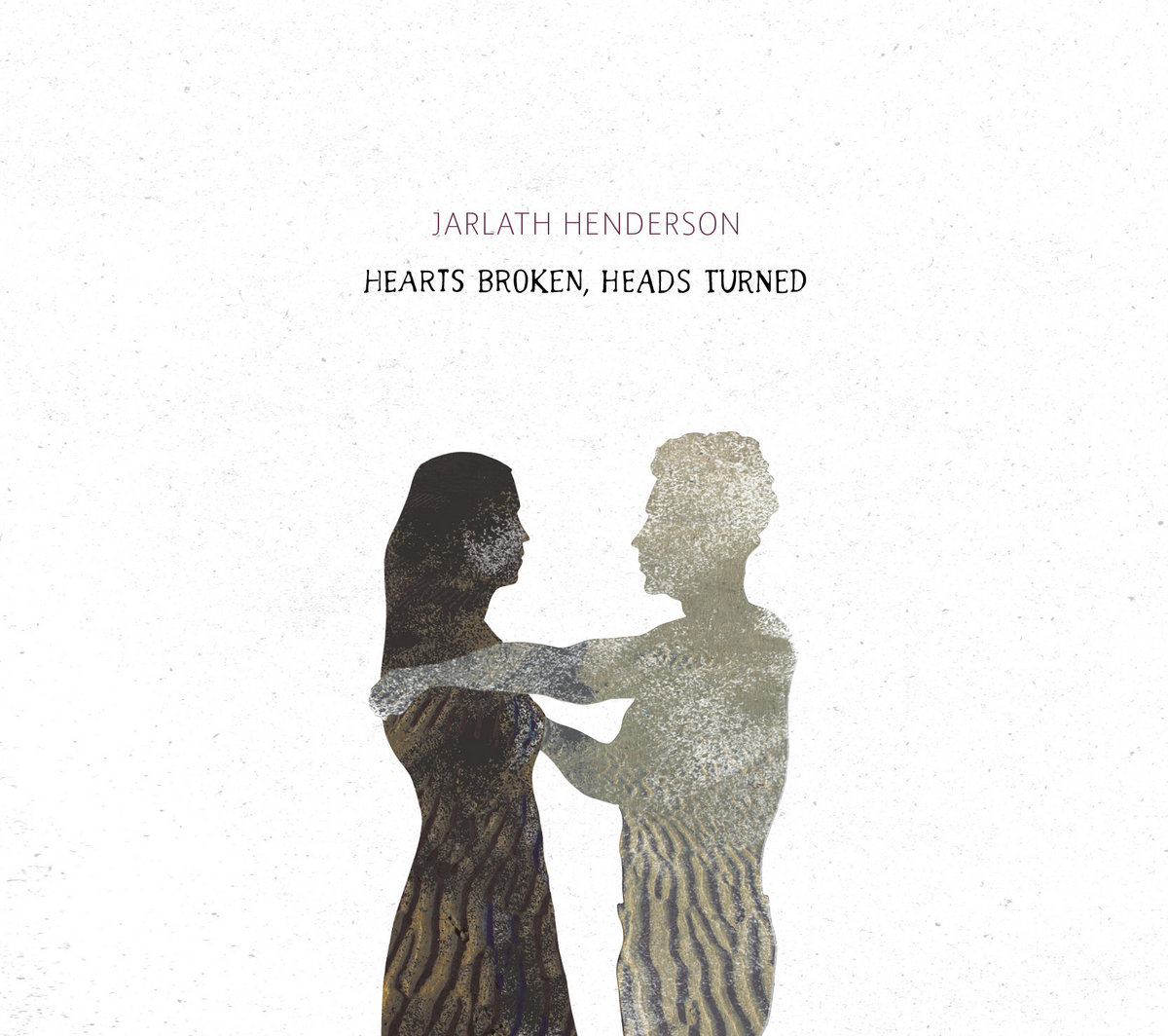
Since becoming the youngest ever musician to win the prestigious BBC Young Folk Award – also the first from Ireland, and the first uilleann piper – Jarlath Henderson certainly hasn’t rushed into making his debut solo album. In fact it’s only now, more than a decade later, that this hotly-anticipated recording is finally in the bag, due out in autumn 2015.
Not that Henderson – also a triple All Ireland champion by the time he was 19 – has exactly been idle. Equally gifted on both pipes and whistles, he won huge critical plaudits for Partners in Crime, his 2008 duo release alongside Scottish co-instrumentalist Ross Ainslie, with whom he’s gigged extensively in both a trio and a six-piece, at international festivals including Celtic Connections, Cambridge, Tønder, Shetland, Lorient and Jodhpur in Rajasthan. Between times, he’s also appeared in such variously stellar company as The Transatlantic Sessions, Jack Bruce, Lau, Capercaillie, Paddy Keenan, Salsa Celtica, Phil Cunningham, Buille, Michael McGoldrick and the Earth Affair line-up, which performed for Nelson Mandela in 2005.
Now 29, Henderson featured on the soundtrack to Disney•Pixar’s 2013 hit Brave, while other recording work includes sessions with numerous folk luminaries including the Peatbog Faeries, Wolfstone, Luke Daniels, Maggie Reilly and Duncan Chisholm, plus genre-spanning Irish soprano/fiddler Deirdre Moynihan and award-winning Belfast poet Gearóid Mac Lochlainn. And in tandem with all this music, he’s somehow found time to qualify as a doctor, studying for five years at Aberdeen before moving to his current base of Glasgow, juggling gigs with hospital shifts to complete his pre-specialist training.
Born in Co. Armagh, the middle child between two sisters in a music-loving household (“Dad plays pipes, Mum sings and plays guitar; at home there’d be trad coming from one room, classical out of another – you couldn’t get away from it”), Henderson himself began playing aged 10, attending classes at the world-famous Armagh Pipers Club (APC).
“As soon as I started, it was like someone suddenly switched on the music button,” he recalls. “Music for me became like football was for most boys my age. By the time I was 12 or 13, I’d be waking up in the morning and putting on old LPs, or playing tunes before school, then coming home and putting more records on while I did homework. First and foremost I just loved the tunes, but also I was a pretty hyperactive kid, and music gave me an outlet for all that energy, plus the discipline to go with it.”
While classical flute lessons at secondary school added valuable skills like sight-reading to his toolkit, traditional music was Henderson’s primary passion, despite the fact that, among his classmates, “it definitely was not a cool thing to be doing – especially when you also didn’t play football.” Any such stigma, however, was more than outweighed by the craic and adventures to be had via the APC: “The teaching was all in groups, by ear, with loads of youngsters involved – we’d all meet up at fleadhs around the country, and the club did exchange trips to Skye each year – there was always tons of fun stuff happening.”
Nonetheless, as the time approached for leaving school, Henderson decided against studying music formally. “I don’t really know where wanting to do medicine came from,” he says. “No one in my family is a doctor, but I was always good at science, and I just clicked onto it pretty early as something I thought I’d like – which I do. I did think about going to music college, but playing had always been a way for me to switch off from studying, so it felt kind of risky to turn it into work, in case it destroyed it as a release.”
If his equanimity today at juggling two such contrastingly high-pressure careers seems impressive, it’s probably because the pressure will never again feel quite as intense as when he won the Young Folk Award, late in 2003 – six months before his qualifying exams for medical school. “That was meant to be the year I wasn’t looking for gigs,” he remembers. “I honestly hadn’t realised what a big deal the competition was – I just picked up a flyer at Pipers Club and thought I’d give it a go. Obviously it was for the best, but it caused me a few proper freakouts – people on the phone wanting me to play every weekend, wanting biogs and photos and stage specs and interviews; me checking flights for gigs to see if I could be back for school, meanwhile trying to knuckle down for exams. I literally got into medicine by the skin of my teeth – but it wasn’t because I was messing about.”
The requisite grades thankfully in the bag, a pre-university year out had always been part of the plan, not least to capitalise on those prizewinner opportunities. Shortly before the Young Folk final, too, Henderson and Ainslie had met playing sessions at the William Kennedy Piping Festival – hosted annually by the APC – and their pyrotechnic partnership was already being forged.
While the combination of Irish and Scottish bagpipes is unusual, the pair “hit it off straight away, musically and personally,” Henderson says. “We both played very intensely, going round and round with each individual tune maybe seven or eight times, and also doing similar things phrasing-wise, so when we played together it just fitted really nicely. And while the music was very intense, the chat and the craic were really easy and natural. We never sat down and decided to form a duo, but by the end of the festival we knew we’d do something together.”
In the event, Henderson spent much of his gap year based at Ainslie’s mum’s guest house in Perthshire, helping with the cooking between gigs, while also starting work on what would – eventually – become Partners in Crime. “I was in my third year at Aberdeen by the time it finally came out,” Henderson observes. “That gives an idea of how much we had to learn about recording – and how much partying there was along the way. It wasn’t the most economical album to make, but we had a hell of a lot of fun doing it.”
Henderson’s dual musical/medical career has continued ever since. After he moved to Glasgow in 2010, performing and recording slotted in around his schedule as a junior hospital doctor, rotating through departments from A&E to psychiatry. While these twin vocations might seem to demand diametrically opposite lifestyles and mindsets, for Henderson they complement rather than conflict.
“I’m forever being asked if I won’t have to choose between them,” he says, “but so far I’ve been able to choose both. I think if I did music all the time, I’d probably be pretty crazy by now, and the same with medicine. It can get a bit crazy as it is – in between two blocks of shifts, I might be playing on two different continents – but doing both definitely helps level me out. It does feel like they use different parts of my brain, but I’m exactly the same guy in either job: I like the fact that I can take myself into them both, get across who I am as a person. There is a definite switch, though, as soon as I’m putting the scrubs on, from Jarlath Henderson to Dr Henderson – because five minutes later I might be dealing with someone coming down off a really bad heroin trip, or someone having a miscarriage, and that needs a very different focus.
“But medicine gives a lot of inspiration, too,” he continues. “You see all different sides of life, get all these wee glimpses into what happens in other people’s days – and you realise how lucky you are. You see the awful situations people get into with drink and drugs, or how for some people, being in hospital is the only human interaction they get apart from TV – you see it all; all the human fundamentals, which gives plenty to reflect on.”
Following a second duo album with Ainslie, 2013’s rave-reviewed Air-Fix, Henderson’s reflective side is firmly to the fore on his solo debut recording – which will surprise as well as delight existing fans, being comprised entirely of traditional songs. The odd vocal number has been featuring for a while in his live sets with Ainslie, mostly contemporary folk covers, revealing a warm, fervently expressive voice that’s won comparisons to Paul Brady. The new album, though, marks a more decisive broadening of his creative and expressive range, as well as a means of reconnecting with traditions close to home.
“I’ve sung since I was a kid – there was always loads of singing in the house,” he says. “It’s a whole other way of relating to an audience: you can conjure a mood or a feeling with a tune, but telling a story in words and music communicates with people in a different way. Plus I don’t want to be put in a box as a piper – I’d like to be seen simply as a musician.”
Most of the chosen songs have direct connections with Henderson’s native turf in Northern Ireland, an area renowned for its rich vocal heritage. He’s drawn on the repertoire of such leading tradition-bearers as Paddy Tunney, Sarah Makem, Roisín White and Geordie Hanna, as well as on versions of some material which have journeyed considerably from their roots. “There’s one really old song, ‘The Slighted Lover’, that’s originally from Armagh, but was first written down in London,” he explains. “I also do a really dark version of ‘The Two Brothers’, which I got from Brian Mullen, who does a show on Radio Ulster, but the original recording, back in the day, was by Elizabeth Stewart from Aberdeen. I really like those kinds of connections – and at a time when the barriers seem to be going up between people and countries, I love the way songs just cut across borders like that.”
While the material is wholly traditional, Henderson’s arrangements on the album are a characteristically bold yet sensitive synthesis of old and new. Besides lead vocals, he himself contributes pipes, whistles, cittern and guitar, with fiddle, flute and double bass also in the mix, courtesy of fellow Glasgow folk luminaries Hamish Napier, Innes Watson and Duncan Lyall. As well as backing vocals from Henderson’s s sister Alana, further instrumentation includes electric guitar, a three-piece brass section, Rhodes, Moog and Wurlitzer keyboards, and percussion/soundscaping by acclaimed beatboxer and “vocal sculptor” Jason Singh. At the controls in the studio was Andrea Gobbi, of Scottish ‘folktronica’ heroes Laki Mera, who – among myriad other magic technical tricks – recorded Henderson’s pipes right up close and personal, creating sundry looped and sampled effects from the sounds of creaking leather and closing valves.
“I didn’t consciously set out to make it sound un-traditional,” Henderson says of the album. “It’s not experimental in that sense – all the ideas for arrangements came from what I heard in the songs. I was aiming for a kind of 70s-style analogue sound – we recorded quite a lot on ribbon microphones, plus all those vintage keyboards – so there’s still a definite traditional vibe or vein running through it.”
Since finishing his first postgraduate phase of medical training, Henderson is currently dovetailing musical projects with locum work, as he ponders his options for further training. The duo and band with Ainslie remain ongoing, while a solo pipes and whistle recording is also in his sights – perhaps next year – but right now, it’s all about the songs. “It’s lovely to have done something that’s purely me, that shows something of how I’ve developed over the last ten years or so,” he says. “These are all songs that really got to me the first time I heard them, and have stayed with me ever since – it has to strike true for me to want to sing it.”