The lights burn low. A haze of smoke lies in the air. The jukebox spins up with a crackle. The rich vocals of George Jones rattle out of the cabinet. An older couple start a slow shuffle around the edges of the dancefloor. It’s a common scene in the juke joints of Southwestern Louisiana, in the dancehalls where young Cajun musician Courtney Granger grew up. “Some people learned to sing in the church,” he says, “but I learned to sing in bars.” While his family set up for the dance, young Granger was singing along with the country records in the jukebox. Strangely, this is a side of Granger that few of his fans know. One of the most revered young Cajun performers, Courtney Granger grew up deep in the Cajun tradition, the grandnephew of the famed Balfa Brothers, and a part of the late-term revival band Balfa Toujours. He’s heir to the haunting high-lonesome vocal style of Cajun singers, now nearly lost. Granger tours the world as part of the Pine Leaf Boys, and he’s been nominated for three Grammys. But he started singing George Jones before he got to any of the Cajun standards. He owes his earliest interest in music to those dark, smoky dancehalls, and now with his newest album, Beneath Still Waters, out October 14, 2016 on SW Louisiana record label Valcour Records, he’s paying homage to these roots.
Rolling Stone recently said "Courtney Granger brings a George Jones-like authority to the proceedings with his finely-tuned voice."
(He's made it back! He put up a hard, hard fight against the music industry that wanted him to jump through some pretty ridiculous hoops. May I point out that one of the songs, So You Can’t Hurt Me Anymore, was written, amongst others, by William Michael Morgan, who looks to be the one of the main figures who are going to keep traditional country alive in the next generation. Jasmine) So You Can’t Hurt Me Anymore
In the very title of 2016's Tradition Lives, Mark Chesnutt
wears his allegiance proudly: he's not concerned about the present,
he's determined to keep old-time country alive. That doesn't mean that Tradition Lives
consists of nothing but hardwood honky tonk tunes, although the album
has a fair share of those to be sure: "Lonely Ain't the Only Game in
Town" and "Never Been to Texas" are the kind of songs that would feel
comfortable in any beer joint south of the Red River. Chesnutt
surrounds these songs with softer tunes, ones that echo the smoother
sounds of the '80s and early '90s, the time when the Texan first started
to gain some traction. These cuts aren't pop so much as they are soft
and elastic, demonstrating how Chesnutt can lean into a lyric, and they also benefit from the aesthetic that ties together the whole of Tradition Lives. Throughout the album, Chesnutt
keeps things simple, spare, and easy, keeping the focus on the song and
the instrumental interplay -- the very things that make for great
country, of which this is proudly part of that long tradition.
Songs like Craig Campbell’s “Outskirts of Heaven” refocus a country genre that’s easily distracted. The singer’s picture of heaven is familiar and satisfying. His vocal performance here is one of the best of his career.
Campbell is a fine vocalist who just needs a string of hit songs to be mentioned in a popular category of hot newcomers. He’s been a dependable presence who has persevered after some record label shuffling. “Outskirts of Heaven” is his best effort to date. He bear-hugs the lyrics — co-written by the singer and Dave Turnbull — and offers them back to a listener in better form than he found them.
Sonically, no one will call this new song anything but country. Cries of the steel guitar accent an opening verse that gets poetic about grandpa. A slow acoustic peddles the verse before a choir of angels helps him rise to touch the high notes in each chorus.
There are songs through the years one wants to compare Campbell’s “Outskirts of Heaven” to (Justin Moore’s “If Heaven Wasn’t So Far Away” comes to mind) but never have several of these hits been clumped together. Country music is indeed cyclical, but we’ve not had a Heaven cycle in quite some time.
Boston native Sean McConnell
has been a presence in country and roots music since the early 2000s,
releasing a string of highly regarded independent albums and writing
songs for major artists like Rascal Flatts, Martina McBride, and Brad Paisley,
among others. With his rich, warm tenor and melodic, pop-Americana
sound, he's seemed poised for a breakout for a number of years. A
decade-and-a-half after self-releasing his debut (at the age of 15), the
life-long independent makes his label debut on Rounder Records.
Recorded and produced in Nashville by Ian Fitchuk and Jason Lehning,
this self-titled ten-song set offers a sound that is rooted in county,
but borrows from the soaring melodic notions of contemporary indie folk.
There was always an inward-looking nature to McConnell's
earlier albums, but here he delves even more deeply into his own past,
wielding his nostalgia in autobiographical vignettes that reveal
childhood experiences, people he's loved, street names, and deep-seated
emotions. From the haunted reflections of heartland rocker "Ghost Town"
to the earnest "guitar kid from Hudson" in lead single "Queen of St.
Mary's Choir," he paints a vivid picture of his life's journey from
naive teenager to Nashville songsmith and family man. The production is
fairly robust, though not so slick that it detracts from McConnell's
soulful, earthy delivery. He's not really breaking any new ground
musically and there are plenty of singer/songwriters working in this
familiar milieu of introspective roots-pop, but McConnell's innate earnestness and hard-earned sense of craft ultimately carry him on this solid release.
Shakey Graves is the stage name of Austin, Texas-based singer, songwriter, and musician Alejandro Rose-Garcia,
who is probably better known under his real name as an actor, having
appeared in several movies and who has had a recurring role in the
television series Friday Night Lights. As a musician, however, he's his
own species, really, having developed a kind of one-man band "hobo folk"
approach to songwriting and performance. His sound is kind of
alt-country, but only sort of, and yeah, he's folky, too, but what
really makes his songs something different is his innate pop sense. His
melodies rise and ebb and crest like waves, gentle and forever flowing
forward, and the best of his songs are simply beautiful and haunting.
This is his second album, following 2011's Roll the Bones, and it's a
lovely, hushed, stark, and yet sturdy set that soothes even as it
startles. Songs like "Only Son," "Big Time Nashville Star," and "Call It
Heaven" are eerie little folk-pop masterpieces, and Rose-Garcia's
voice is a subtle, emotive tool, as is his sparse but effective guitar
playing. There probably isn't a radio hit here, because his songs are
built around melody rather than box-your-ears rhythms and beats, but
they have a melancholic and angelic tone to them that gently takes one's
breath away.
Veteran Americana collective Marley’s Ghost released their 11th album, The Woodstock Sessions,
on July 15th; for the last three decades, the band has been reinforcing
and solidifying the genre’s place in the music world, with prowess that
spans from roots to rock, from soulful gospel to country, and from
blues to bluegrass.
The band celebrated its 30th anniversary with the release of The Woodstock Sessions, helmed by Grammy-winning producer,Americana Music Association Lifetime Achievement Award winner, master of all things stringed, (and Mother Church Pew hero) Larry Campbell, who has worked with countless artists, a roster which includes the likes of Bob Dylan and Levon Helm.
Recorded at the
legendary Levon Helm Studios in Woodstock, New York, the album brims
with their signature multi-part harmonies and beautifully traditional
instrumentation; bookended with bluegrass-y foot-stompers, sprinkled
with zydeco-tinged two-steppers and gospel-infused heartstring-tuggers,
with a touch of swampy blues mixed in for good measure, this album
explores and celebrates every nuance ofthe greatness that is American
music.
While everyone was (rightly) heaping praise and celebrating Sturgill Simpson’s Metamodern Sounds in Country Music, another great country album came out that same week. And that album was Matt Woods’ With Love From Brushy Mountain. Thanks again to Trigger from Saving Country Music for
pointing out another great country music artist to me. I had never
heard of Woods before and I regretted that once I gave a listen to his
latest album. If you love Simpson, you’re going to love Matt Woods too.
After you take a listen to With Love From Brushy Mountain (the
name comes from an old prison), the song that will immediately stand
out amongst the rest is “Deadman’s Blues.” This song was released as a
single last year, but it was completely new to me. “Deadman’s Blue” is
one of the best country songs I’ve heard in recent years. The song is
about loneliness, failed relationships and being your own prisoner,
which is the overall theme of the album. Woods shows such great, raw
emotion in this song. He does this by slowly raising his voice
throughout the song. In the beginning he’s somber and reflective and
then it builds into frustrating realization. Lyrically it’s perfect. The
best line to me is when he says he’s “a first place loser and a last
place friend,” which perfectly describes the man’s pain in the song. If
you don’t feel like listening to the whole album, at least listen to
this song.
Marcus Blacke new self-titled album, out now via Three Sirens Music Group, is a lot
of things. The Australian’s latest 12 songs go from deep and emotional
to dripping with socio-political subtext to something more traditionally
categorized as Americana – but one thing it is not, is comfortable.
Regardless of what Blacke is singing about in his unique vocal style –
and, with equal weight, playing guitar (more on that later) – you are
there to feel it. And believe me, you will.
People spend their life avoiding feelings. I’m not
writing songs so people can dance. I want them to know it is okay to
feel something. We’re built to be melancholy sometimes. – Marcus Blacke
The album may be far from “easy” listening, but it is well worth the
emotional journey that Blacke takes you on. And speaking of that guitar
work, and all the music really, it provides the perfect backdrop;
bucking convention with twists and turns of its own – it is recorded as
raw and searching as the lyrics themselves.
The first contemporary connection my brain makes with Marcus Blacke
is one of my earliest musical hand-holds, Elliott Smith. Smith’s music
had such a profound effect on me during his life, more so in death as I
was growing up and trying to be an adult. Something to go back to,
something to fall back on when I needed it. I find Blacke’s songs here
provide the same musical template for my required emotional
attach/detachment.
It’s no surprise, to me anyway, that I gravitate towards Blacke’s
“Only Orchid” and “Holding Tokens”, while also having great regard for
“Russian Orchard” and “Master of Eden”. Blacke is nothing if not honest
and humble throughout not just these 4 songs, but for all of this
album’s material – 12 expertly crafted lyrical and musical compositions
that will stick with you long after it’s run-time is over.
The third studio long-player from the Muscle Shoals-born crooner, the aptly named Cautionary Tale finds Dylan LeBlanc
exorcizing some personal demons while injecting some much needed pomp
and circumstance into his signature blend of breezy, '70s West Coast
singer/songwriter pop and Bible Belt-bred gothic Americana. A conscious
attempt to avoid relying on the self-described "sad bastard songs" that
were so prevalent on his prior two releases, Cautionary Tale
doesn't exactly shake the rafters, but the addition of a rhythm
section, along with copious amounts of cello, violin, and viola,
certainly helps to expand the young troubadour's sound. His high and
lonesome croon, a velvety mix of After the Gold Rush-era Neil Young, James Bay, and Fleet Foxes' Robin Pecknold, sits much higher in the mix this time around, and imbues highlights like the lush and lovely Eagles-esque
"Roll the Dice," the snappy and soulful "Easy Way Out," and the road
trip-ready title cut with an air of confidence that had been missing up
to now. Even the quieter moments, of which there are still quite a few,
especially on the LP's more laconic back half, are bolstered by tight
production and the sterling performances of both LeBlanc and his band. Lyrically LeBlanc is still mired in the faux-verisimilitude and myopic ruminating that are the bane of all twentysomethings, but with Cautionary Tale,
his finest outing to date, he's stepped far enough out of his shell
that the world around him is starting to come into focus.
“I was born in a summer storm …” are the first words you hear
Americana singer-songwriter Frankie Lee sing on this impressive debut
full-length. And those thoughts beat at the heart of much of what drives
the remaining 41 minutes. This is summer music of the highest order;
not dependent on throwaway tunes or singalong choruses, Lee’s songs
swoop and soar with the airy qualities of a warm July breeze and his
sweet, expressive voice goes down as easy as lemonade. There are darker
concepts too that account for the “storm,” as seen in the murkier
figures that run through “Black Dog” and the loner considering a more
stable life in “Buffalo.”
Like the Jayhawks, who, like Lee, hail
from the Midwest, these tracks arrive fully formed with strumming,
spiraling, cascading guitars and organic, easy rolling melodies that
seem plucked from the air. Lush and honeyed but with an edge lurking
underneath, the rootsy feel is natural and effortless.
The approach falls between early Eagles and Neil Young’s Harvest Moon
with a strong whiff of Tom Petty. And while Lee’s talents aren’t yet
at the level of those icons of the genre, he has a similar sense of
composing hummable songs with sharp lyrics driven by a boyish voice that
balances sweet and tart. The easy Latin vibe and Brit invasion guitar
bubbling under the beautiful “Know by Now” is informed by a hint of
Brill Building songcraft that makes it sway and shimmy in all the right
ways.
The drifting electric guitars of “East Side Blues” express
all the loneliness of lyrics like “I’m missing my sweet mama/she’s out
there on her own,” without Lee having to say a word. The closing title
track adds piano and strings to bring a bigger, more dramatic scope
lyrically (Lee is looking for a better world), vocally (there is a trace
of John Lennon) and stylistically, but feels like it ends too soon. Lee
is clearly a newcomer worth watching but don’t let that distract you
from enjoying an album perfect for both lazy, hazy, summer nights and
sunshiny days.
After scoring with the John Mayer-esque pop of "Amazing" and the upbeat country of "Georgia Clay," Josh Kelley has decided it's time he bared his soul to us all. For his eighth album (and first for Sugar Hill), 2016's New Lane Road, Kelley
has taken a detour into singer/songwriter territory. The album delivers
a dozen personal songs about love and family with a feel that's
half-Nashville and half-Laurel Canyon. Kelley has said that he was listening to a lot of vintage Eagles and Jackson Browne material while recording the album, and it's not hard to hear the influences. Kelley even soaks up traces of Browne's vocal inflections on tracks like "Call It What It Is" and "I'll Be Standing Tall." If this music favors Kelley's country side, the mood is laid-back and contemplative. Most of the time, Kelley
has relationships on his mind. "It's Your Move" and "Call It What It
Is" don't make such things sound easy, but "The Best of Me" and "Cowboy
Love Song" suggest it's all worthwhile. "Take It on Back" shows the man
loves soul music, and he cuts a pretty convincing groove with the
goofball funk of "Anywhere You Wanna Go." Many of the songs on New Lane Road cover familiar lyrical tropes, but Kelley brings a warmth and sincerity to this music that's honest and effective. And Kelley
certainly sounds more comfortable singing about the glories of married
life than he did trying to fit into the boundaries of mainstream
country. New Lane Road is a few steps short of a triumph for Josh Kelley.
But it's strong and well-crafted enough to sound like he's found a
direction that works for him, and this ranks with the singer and
songwriter's best work.
Calexico
have had a chiaroscuro career: after each of the band's more somber
efforts, they tend to return with something lighthearted. Such is the
case with Edge of the Sun: arriving after Algiers' journey into New Orleans noir, it feels like a working holiday -- probably because it was close to one, with Joey Burns, John Convertino,
and company spending ten days in Coyoacán, a Mexico City borough, for
inspiration (later on, they recorded in Los Angeles and Athens, among
other locales). Despite its Mexican beginnings, Edge of the Sun often tips toward Calexico's
affable Americana, with particular success on "Falling from the Sky"'s
tumbleweed pop and on the gently insistent "Tapping on the Line," which
is elevated by Neko Case's clarion vocals. On these tracks, Edge of the Sun recalls Garden Ruin and Feast of Wire,
although the latter album negotiated its sonic and emotional twists
with more drama. It's almost as though these songs are so sunwashed that
they just can't be truly dark, even when the band tries its hardest.
"Beneath the City of Dreams," a tale full of dealers and getaway cars,
might have had more heft if it had appeared on Algiers or Carried to Dust, although Gaby Moreno's
cameos almost get it there; similarly, the "days of sorrow" referred to
on "Moon Never Rises" feel distant, not recent. On the other hand, the
gentle melancholy of "Follow the River" and the squinty-eyed, implosive
"Bullets & Rocks" feel genuine. As always, Edge of the Sun
is beautifully crafted, from the gorgeous arrangements and chord
changes on "Coyoacán" and "Woodshed Waltz" to "Miles from the Sea"'s
poignant lyrics, which fall somewhere between a short story and a
lullaby. Still, it's hard to shake the feeling that this album is a
little perfunctory compared to what came before it, and at times, it's
predictable: "When the Angels Played" is the kind of dusty, strummy song
that sounds like it should have a harmonica solo -- and sure enough, it
does. It's notable that Edge of the Sun's
brightest highlight is "Cumbia de Donde," a celebration of the
footloose life. As pleasant as the album is, this time it feels like Calexico are just passing through.
It turns out that bearded gents Sam Beam of Iron & Wine and Ben Bridwell of Band of Horses
were friends in their hometown of Columbia, South Carolina back before
they were ever touring-bill companions or Sub Pop labelmates (mid- to
late aughts), and well before they recorded a covers album together.
Perhaps a studio collaboration was inevitable or even overdue given
their amity, frequent path-crossing, and shared tastes and influences
represented small-scale here on the 12-track Sing into My Mouth. The title is taken from lyrics in the opening track, "This Must Be the Place" by Talking Heads, a sign of the relative diversity to come, which bridges Sade, John Cale, El Perro del Mar, and Peter La Farge. The Talking Heads
tune is a toned-down take with acoustic and slide guitars, bass, piano,
accordion, and light percussion, representative of an album full of
slide guitar-heavy arrangements that fall squarely within folky
expectations. Versions most similar to the originals include Ronnie Lane's "Done This One Before," '70s U.K. band Unicorn's "No Way Out of Here" (better known via David Gilmore's cover), Spiritualized's "Straight and Narrow," and fellow South Carolinians the Marshall Tucker Band's beautifully spare "Ab's Song" -- all folk-inspired or twang-leaning to begin with, and covered affectionately with Beam and Bridwell
trading lead-vocal duty throughout the record. Most altered are the
duo's reworkings of the strings-supported, Brill Building-esque "God
Knows (You Gotta Give to Get)" by Sweden's El Perro del Mar, which is slowed down here and given an earthy woodwind and guitar delivery; Sade's "Bullet Proof Soul," which still sounds uniquely Sade despite a rootsy rearrangement; and Them Two's 1967 soul plea "Am I a Good Man?," previously covered by Bridwell's Band of Horses and captured with enthusiasm on Sing into My Mouth by piano, reed instruments, electric guitars, bass, and percussion. Other songs include Bonnie Raitt's "Anyday Woman," John Cale's "You Know Me More Than I Know," and J.J. Cale's
"Magnolia." That kind of variety keeps things interesting, though none
of the arrangements comes as a real surprise with the exception of the
closer, "Coyote, My Little Brother" (later covered by Pete Seeger but recorded by its songwriter Peter La Farge in 1963), a yodeling, Native American-inspired lament that gets full dream pop treatment with Bridwell
on lead. Still, the represented songwriters and the sequencing, which
nimbly waltzes through 50 years of song selections beginning with a
quirky new wave tune and ending with a howling cautionary ballad, are
rendered with grace. Those attracted to the collaboration's premise will
very likely appreciate its results.
Since making his debut in 2004, Brett Dennen's
amiable folk-pop has earned him a loyal following and placed him among
some of the previous decade's more prominent contemporary pop
troubadours, from Jason Mraz to Ray LaMontagne.
While he hasn't quite enjoyed the success of those acts, it's certainly
not for lack of trying. His wealth of hooky melodies and thoughtful
acoustic musings has been spread out over five strong releases and his
almost John Denver-like aura of sincerity gives him an approachable allure. On Por Favor,
the singer's sixth effort, he strips his music down to the barest
essentials to create what is easily his most vulnerable and intimate
album. Admittedly worn thin by a relationship on the rocks, family
trouble, and a health scare, this is a Dennen
we've never heard, with a noticeably frayed spirit and a searching
heart. The feeling of heightened sensitivity and the minimalist
production from Nashville's Dave Cobb (Sturgill Simpson, Jason Isbell) gives Por Favor more of an organic and timeless feeling than any of Dennen's prior work, and his quavering high tenor has never sounded so appropriate to the material. But even in his darkest hours, Dennen's
breezy style and humble demeanor make him come off like a fallen
optimist trying to retune his antenna sunward. Light tones of calypso
and reggae color tracks like "What's the Secret?" and "Stand Up for It,"
and the rhythm section of drummer Chris Powell and bassist Brian Allen pepper the tunes with a roomy, off-the-cuff vibe. On his sunnier moments, Dennen evokes the loose, rootsy vibe of American Beauty-era Grateful Dead, and there's even a reference to Jerry Garcia on the hushed standout "Strawberry Road." Recorded in just a couple of weeks at Cobb's
all-analog Nashville studio, the performances are loose and honest,
with tape hiss filling the gaps between chords on quieter tunes like
"Where We Left Off" and the bittersweet closer "I'll Be on Your Side."
As both a writer and a singer, Dennen has never sounded so fragile and unpolished and it's a perfect fit for this fantastic group of songs.
The twin powers of the road and memory are powerful, beguiling forces for singer/songwriters. Aoife O'Donovan is no exception. In the Magic Hour
is her sophomore album. Written mostly during a solitary respite from
traveling, its intimate songs are haunted by the emotional resonance of
memory. The life and passage of her 93-year-old grandfather and her
childhood visits to his Clonakilty seaside village in Ireland loom large
over these recordings. Re-teaming with producer Tucker Martine,
the pair built these tunes from the barest of essentials -- usually
just her voice and a guitar -- before a studio band and carefully woven
contributions of collaborators (including Sara Watkins, Sarah Jarosz, Chris Thile, Brooklyn Rider, Rob Burger, Eyvind Kang, and Tony Furtado)
were added. Employing standard folk-rock instrumentation, the words in
"Stanley Park" could be a closing song rather than an album opener:
"...If I could take my rest/Back in the belly from where I came/nobody
knows my name…" Burger's
piano highlights the lilting melody on the horizon of her poignant
lyrics but never gets maudlin. The title track is brighter, framed in an
arrangement that approaches Baroque pop. Pump organ, Wurlitzer, Watkins' fiddle, crisp snare, and reverbed electric guitars bump under O'Donovan's
in the rear view lyrics. "Donal Óg" commences with long, modal, droning
electric guitars, its undercurrent of Celtic melody is sad and wistful
in a narrative that's equally painful and affirmative. The voice of her
grandfather wafts in from the margins in its closing moments,
underscoring its poignancy. Gabriel Kahane arranges the strings for Brooklyn Rider
on "The King of All Birds," a minor-key, acoustic-electric rocker with
winds and brass patched into its final frames to add texture and
harmonic imagination. Furtado's banjo, Watkins', fiddle, and Laura Veirs' backing vocal adorn the shimmering, heartbroken waltz "Not the Leaving." It's answered by "Detour Sign," in which O'Donovan's
protagonist blows up a relationship, deciding love is not enough in
facing of her life challenges. Amid the meld of guitars, the Wurlitzer
erects the tune's spine; it buoys the words -- which admit regret even
as they decide a course of action -- as well as the rest of the
instrumentation. Closer "Jupiter" contains words that almost contradict
it. Amid bittersweet memory, temporal displacement, and the tension of
greeting an uncertain future, the protagonist concludes in the resolve
that love triumphs. The vanguard folk-cum-art song music is bracing, led
by the strings of Brooklyn Rider. In the Magic Hour lives up to its title. O'Donovan's
sometimes searing, always poetically rendered lyrics are matched by
astute, economically articulated melodies. These songs leave listeners
with the impression that they actively chose to grant emotions and
memory places as proper collaborators here. O'Donovan
seems certain that as she allows them voice, the trails they carve in
the heart become as priceless as what they teach.
Jimmie Rodgers has been the subject of tribute albums before -- perhaps the most memorable is Merle Haggard's 1969 classic Same Train, a Different Time -- but Paul Burch's Meridian Rising
is distinctly different: the singer/songwriter designed his 2016 album
as "an imagined musical autobiography" of the country legend. By neither
following the conventions of a traditional tribute album nor the
contours of a biography, Burch is freed to be fanciful, dreaming up scenarios for Rodgers that may not strictly adhere to written history and allowing himself to tip a hat to Rodgers' jazz and blues contemporaries. Such elasticity lends Meridian Rising considerable life, letting Burch
slide into hot dance music as easily as he cops to a blue yodel. He's
playful but not at the expense of his subject: if anything, his blurring
of fact, fiction, and styles allows Rodgers to not be seen as a museum piece, a figure that exists only in dusty history books. Burch's
wry, witty compositions -- which find their match in his swinging band,
its lineup shifting to accentuate the tones of the tunes -- bring the Singing Brakeman
to a colorful, full-bodied life while also illustrating how he's
peerless as an Americana craftsman: he's absorbed tradition so
thoroughly, he knows it's a shame to exist solely in the past, so he
makes albums as rich and delightful as this.
(The previous album was better, but he still got it. The video I picked features Freda Black, who sings this traditional British Romany song, followed by Sam Lee's version. Jasmine)
Sam Lee’s American debut The Fade in Time presents an artistic
wanderer with a deep reverence for the British folk tradition, an ear
tuned to the broader world’s rhythms, and a restless heart. A
journeyman whose varied endeavors range from wilderness survivalism to
burlesque dancing, it is fitting that his chance encounter with renowned
Scottish Traveller singer Stanley Robertson set him upon his musical
career. Robertson’s tutelage led Lee to understand the need for a new
generation of song collectors to keep the old songs alive and make them
vital in a new millennium.
The British folk ballad tradition is an endless store of inspiration and variation. Like the stories of The Old Testament,
they collectively contain the beauty, tragedy, faith, and folly of
humankind, and like that collection’s influence upon the literature of
the centuries that followed, so have these old songs guided the
development of the American and British popular songbooks. Lee’s
interpretations of these songs is both a distillation of all that has
come before and an adventurous beckoning to follow him into an uncharted
future.
Lee brings a scholar’s care to annotating his songs’ origins in his
liner notes, crediting his teachers and sprinkling soundbites of the
past songkeepers throughout the album. We hear Charlotte Higgins sharing
an “old old song” with collector Hamish Henderson from 1956 in the
intro to “Lord Gregory” while “Bonny Bunch of Roses” opens with a sample
of a Serbian singer from a 1952 Smithsonian Folkways recording. As many
of the versions of the songs Lee sings have their origins in Traveller
and Romany Gypsy cultures, they offer creative and surprising variants
upon their formally known sources. “Over Yonders Hill” offers a
variation of “The Bold Young Farmer” with its lament of, “I wish my baby
was born and sits smiling on his own daddy’s knee.” And the ancient and
familiar “The Cuckoo” appears within the refrains of “Moss House”.
Lee’s rich baritone on these songs shows the depth of his learning from
Robertson and from others such as Martin Carthy and Ewan MacColl.
It is in Lee’s musical arrangements under the guidance of producers
Arthur Jeffes (Penguin Café) and Jamie Orchard-Lisle that this album
takes off into uncharted territories, suggesting a wide mix of
influences and inspirations. One hears the psychedelic-tinged influence
of the first British folk revival artists like Fairport Convention and,
especially, their jazz-influenced contemporaries Pentangle. There are
ample neo-traditionalist flourishes, such as dominated Celtic music of
the 1970s like the Bothy Band and Silly Wizard, and even a (thankfully
small) whiff of the airiness that defined the genre as it crossed into
mass appeal during the 1980s. But the album’s sonics are dominated by an
adventurous worldliness and sometimes cacophonic layering of surprising
sounds and instruments. Hints of Bollywood and arabesque styles merge
with more percussive modern classical or post-rock elements. At times,
the instrumentalists—particularly Steve Chadwick on horns, Jonah Brady
on koto and ukelele, Flora Curzon on Violin, Francesca Ter-Berg on
cello, and Josh Green on percussion—build into a trance-like backing
that evokes the neo-psychedelic folk of Erland and Carnival. Their
playing is organically connected even when working in dissonant
counterpoint.
This album, which follows upon Lee’s 2012 Mercury Prize-nominated release Ground of Its Own,
rewards repeat listening. It’s an album that, even in its quiet
moments, refuses relegation to the background. In short, it serves to
announce the arrival of a great talent who promises to find new ways to
keep us singing the old songs well into another century.
It’s
hard to find a list of “Best Places To Live” that does not have
Asheville, NC on it. The people, the community, the arts, the Blue Ridge
Mountains: all combine to keep Asheville high on any list for people
searching for an upgrade on quality-of-life. When writers scratch the
surface they discover a local bluegrass music scene that draws from and
gives back all of these qualities.
There’s no better example of this than Asheville-based bluegrass band Town Mountain.
What started as a local project has quickly became known throughout the
national bluegrass music scene for heartfelt songs, crisp and clean
picking, and the unmistakable South Georgia voice of Robert Greer.
Town Mountain is releasing their fifth studio album, Southern Crescent,
on April 1st. The album was recorded by producer, Grammy winner, and
all-around music genius Dirk Powell in his home studio in Breaux Bridge,
Louisiana. The studio, dubbed The Cypress House, lives up to its name
by being fully constructed with cypress planks. “We wanted to get a
little South Louisiana flavor in it!” jokes Greer, Town Mountain’s lead
vocalist and guitarist. Southern Crescent has the feel and groove of a live album
with professional studio recording quality. “We walked into the studio
and had never met Dirk before, so it’s kinda strange, because you’re
going to get after some serious work for large amounts of time,” says
Greer. “We go in and he’s got 3 mics set up in this awesome room and
says ‘A’right, let’s get to it!’ He wanted us to work it like we’re
onstage. I sang everything live and we recorded like we were standing in
his living room. It was a great experience, and we all loved working
with Dirk. I came out of that experience thinking that’s how I want to
record every record from here on out.”
Much like the first generation bluegrass bands would start shows with
a short and to-the-point blazing instrumental to grab everyone’s
attention, this album comes out hot with Bobby Brit’s fiddle-led St. Augustine. Brit’s fiddle is consistently creative and smooth throughout the album and an absolute show-stopper in their live shows.
The second track, Ain’t Gonna Worry Me, slows it down to
feature the deep and comfy groove these guys find with each other.
You’ll be excused if you don’t readily notice the drums played on this
track by Dirk Powell. Powell’s ability to layer non-bluegrass
instruments into this album, providing both groove and a sonic thickness
without drawing explicit attention to them, is quite impressive and
highlights his producer capabilities.
The title track, Southern Crescent, presents the voice of
mandolinist Phil Barker, and is one of two songs he co-wrote with
Charles Humphrey III, the bassist for Steep Canyon Rangers. (Humphrey is
a prolific songwriter and is fresh off accolades for the 3rd release
with his sideband, Songs From The Road Band.) A hard driving train song, Southern Crescent
features tight vocal harmonies, as well as Jesse Langlais’ unique banjo
style that combines impressive Scruggs-style timing with subtle blues
licks that always seem to fit perfectly within each song.
The
bluegrass coming out of Asheville, NC is arguably some of the best in
the world. I would even claim that in passion, picking, and
individuality it rivals Nashville, TN. Balsam Range and Steep Canyon
Rangers have been on the forefront of taking the Western NC sound to
national and worldwide audiences, and Town Mountain is on their way to
completing this trifecta of nationally known Asheville bluegrass bands.
There are several prominent reasons for their rise, including
songwriting, creativity, and instrumental prowess, but one that stands
out is the voice of Robert Greer. His singing voice and speaking voice
are nearly one and the same with a deeply southern Georgia accent that,
for many of us, produces a sense of hometown-like comfort. Greer grew up
singing in the Methodist church, but he didn’t start playing bluegrass
guitar until he was 25. “I was tired of asking my friends to accompany
me on bluegrass songs I wanted to sing, so I figured I better learn how
to play,” says Greer.
The bluegrass bands that will find success in today’s musical
multiverse are going to embrace their individual voices and steer
towards a more genuine sound as opposed to one that is digitally
polished and bland. Town Mountain is leading the way in this aspect,
from their studio recordings and their live shows to the national praise
they’ve received for their unique take on Springsteen’s classic hit I’m On Fire. Atlantic Monthly
chose it as one of the “most transformative cover songs of the year”
and wrote, “They dropped the synthesizer, added a banjo, a fiddle, and
another singer for harmony, and made a gem.” Southern Crescent is a near-perfect balance of tradition and
young, raw energy. On the surface it’s solid bluegrass, but astute
listeners will hear more. They’ll hear a hundred years of southern
musical culture bubbling up and finding a common point where North
Carolina, Georgia, and Louisiana meet as old friends. Town Mountain’s
style and sonic footprint comes from a foundation of rhythm and groove
that comes not from just loving the music (that’s too easy) but from
living the music.
Widely regarded as one of the most innovative acts to come out of the UK in recent years, the sublime genre-defying sound of the Red Dirt Skinners is created by husband and wife team, Rob and Sarah Skinner.
In 2013 the Red Dirt Skinners became the first band in history to succeed at both the British Blues and the British Country Music awards. Don’t let these accolades pigeonhole the Skinners though; their audiences always describe them as ‘refreshingly different’.
Drawing on influences from folk, country, blues, americana, jazz and everything between, the Red Dirt Skinners’ sound is instantly recognisable.
Comfortably blending exceptional, almost telepathic, harmonies with the unique instrumentation of soprano saxophone and acoustic guitar, audiences fall in love with the Skinners sound.
Hailing from the South East of England, Rob and Sarah have both been musicians for the majority of their lives.
Sarah; classically trained on the clarinet from about the age of 6, progressed through the grades before switching to the saxophone. After winning Instrumentalist of the Year at the British Blues Awards in 2014, Sarah became the first female artist to be endorsed by Trevor James Saxophones.
Rob grew up with a father who played bass guitar, and a grandmother who taught piano. As a young teen, he turned to the guitar, but still plays many other instruments. Also having worked in bands since a young age, Rob brings the occasional rocky influence to the band.
Rob and Sarah write all their material together, with Sarah focussing on lyrics and Rob adding his extensive music theory knowledge to create unique chord sequences and stylings.
After a burglary at the home they were renting in 2012, Rob and Sarah decided to take inspiration from the depths of despair and wrote a collection of songs about how they felt about the events of that weekend. The album received such positive press and airplay that sales of ‘Home Sweet Home’ ensured that the Skinners were able to purchase their own property.
Advocates for finding the positives in every situation, Rob and Sarah spend much of their off-tour time encouraging new artists into the music scene and finding them performance opportunities.
From small beginnings in small venues, the Red Dirt Skinners swift rise in popularity sees them now commanding theatre audiences across Europe and Canada. A Red Dirt Skinners concert combines captivating storytelling with knowing lyricism and outstanding musicianship.
"Musically set apart from the mass of bands who are just copying what has gone before" Music News 4/5
The space where the vocals of Sarah and Rob Skinner meet features two tones existing as a single note". The Alternate Root Magazine
I love it when I get to hear new newgrass music from overseas, as many
musicians from around the world play various versions of this music and
inevitably wonder what the Yanks think about it. Jason Titley grew up
in a musical family whose father was part of the rock-and-roll scene of
1960s London, England. He played in various musical formations with his
father, Bill, from an early age, mostly playing percussion. As Titley
grew older, he continued playing the drums and keyboards and attended
various music schools.
Then, Titley moved to Totnes, an
artist-filled town in southern England whose history goes back 2,000
years. It was there, along the tidal river called Dart that Titley
discovered bluegrass music. Eventually, he moved west to another river
town, Tewkesbury, where he woodshedded with a Martin D-28 guitar for a
year and emerged with a new bluegrass band called Natural Hazard. That
led to the groups The Daily Planet and Rabbi John. Still Rollin’
is Titley’s latest solo album and, on it, he’s backed by British and
American musicians alike. To his credit, he wrote all of the songs here
and produced the cuts. There are 26 guest musicians, including Casey
Driessen, Tony Furtado, Billy Cardine, Matt Flinner, Mike Witcher, Gabe
Witcher, Jim VanCleve, Rob Ickes, Tim O’Brien, Ben Winship, his father
Bill, and many more. The music is open-minded with a World Music flare.
Titley puts this long list of guest artists to excellent use with
challenging arrangements, letting them do their thing. For those who
like to see the envelope pushed with excellent musicianship leading the
way, seek out this diverse album and enjoy.
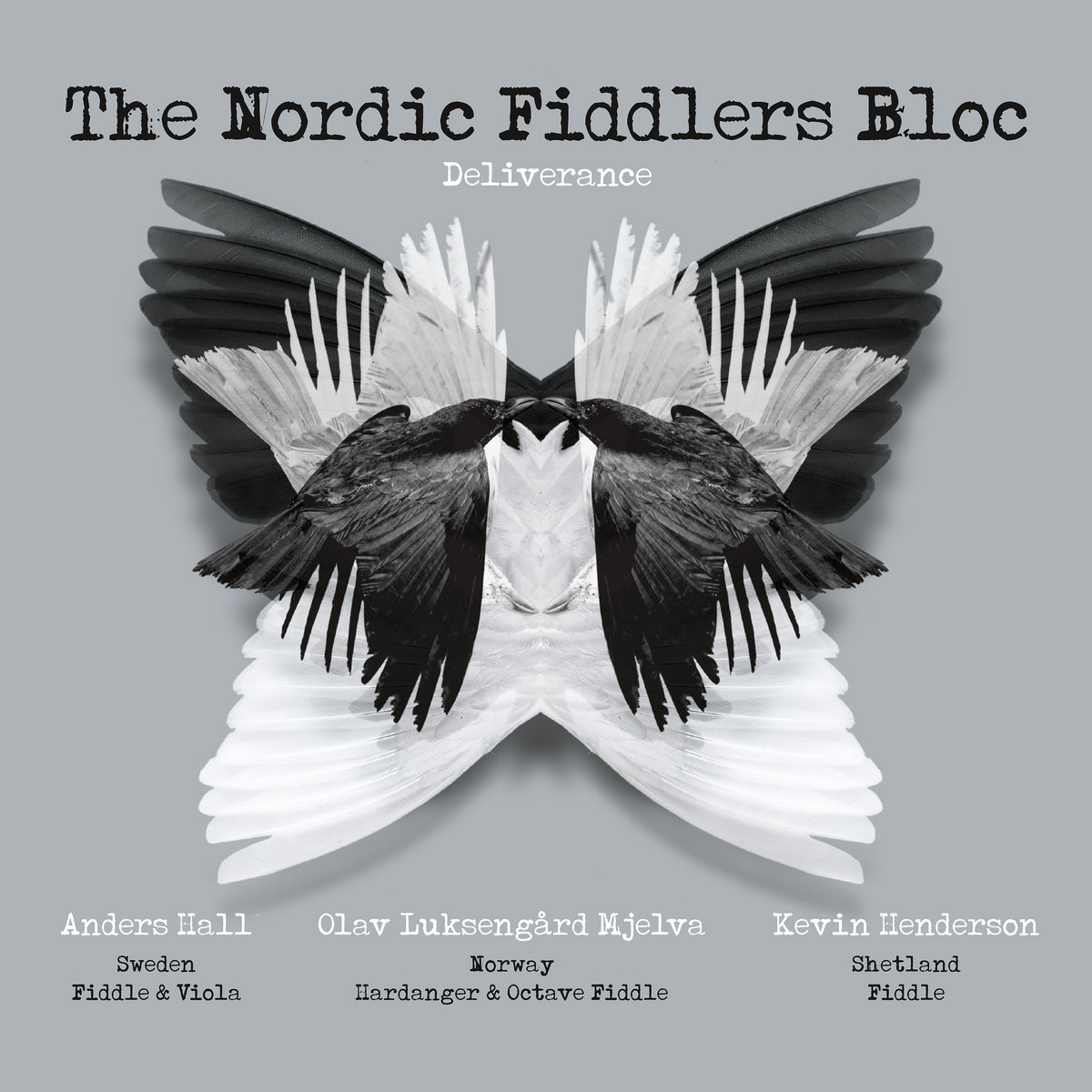
3 Fiddlers. 3 Traditions. Each fiddler has traveled the old routes that tie their cultures together, the ancient pathways once trod by Vikings and Norsemen. Across the centuries, they’ve come together now to bring the historic ties that bind these traditions to light. Norway – Olav Luksengård Mjelva. Sweden – Anders Hall. Shetland – Kevin Henderson. With their new album, Deliverance, The Nordic Fiddlers Bloc unites three fiddlers to create a new sound, beholden to the past, but full of fire, passion, and a vision for how this music could sound today. On Deliverance, The Nordic Fiddlers Bloc transcend the trio format to create an almost orchestral sound. Blending violin, viola, hardanger fiddle, and the rarer octave violin, they craft arrangements like interlocking, woven threads. As the fiddles weave together, it’s impossible to tell one from the other. Each builds to a larger whole, creating an uplifting, joyous sound of unity.
Grant-Lee Phillips
has a voice glorious and strong enough that he could sing nearly
anything and his loyal fan base would be happy to hear it. But after
moving from California to Tennessee in 2013, Phillips sounds like a happier and invigorated man on 2016's The Narrows, which boasts a lively and engaging spark. On the surface, The Narrows doesn't feel all that much peppier than most of Phillips' solo catalog, but the pace of this music is less lazy than contemplative. Backed by Jerry Roe on drums and Lex Price on bass, most of these tunes settle into an easy but determined groove, but when Phillips turns up the gas on "Loaded Gun" and "Tennessee Rain," the effect is powerful and liberating. There's a subtle passion in Phillips' performances here that makes all the difference, a pale fire that brings these tunes to life. Though he's moved south, Phillips writes a lot about his memories of life in the West on The Narrows.
He calls up evocative images of family, childhood, and the extended
landscapes of California, and the mood is more artful than nostalgic,
finding beauty in both good and harrowing experiences. Perhaps Phillips had to leave California behind to see it clearly, but The Narrows is a striking chronicle of life in the Golden State. As a piece of record making, The Narrows is simple but deeply satisfying, as good as anything Phillips has made since going solo. Hearing him sing is always a richly enjoyable experience, but The Narrows delivers as both form and content. It's recommended to anyone who has ever found pleasure in his work.
The world of country music is huge. I’m not just referring to
mainstream country music, the Texas country music scene and the
independent world. There is country music being made worldwide.
Close-minded people believe it’s just hillbilly and redneck music.
Country music though is as universal as rock and pop music. With so much
country music being made worldwide, it’s impossible of course to cover
it all. As a reviewer you simply keep your eyes and ears open all the
time for country music. The best at finding new and great country music
is without a doubt Trigger at Saving Country Music. As I’ve said before
he was one of the main influences that inspired me to create Country
Perspective. And he has once again introduced me to another great country artist: Tami Neilson.
Neilson is from Auckland, New Zealand and is quite popular in that country,
winning numerous accolades. She has toured Canada and North America
numerous times, even opening up for Johnny Cash. See what I said about
country music being worldwide? If you’re a dedicated reader to this site
you know I like to venture outside of America and review country music
from other countries. And I’m going to tell you before even reviewing
Tami Neilson’s album Dynamite! that it’s fantastic. Go listen
to it and buy it. I’m going to try to do as much justice as possible to
describe how good each song is on this album.
The worn floor of an old honky-tonk is not usually a place you’d think of as welcoming to bold new experimentation. If you’ve got something new to say, you’d better say it in the form of a brisk two-step that keeps the dancers moving. So it’s doubly impressive that Seattle country band Western Centuries is able to meld wildly disparate influences into an original honky-tonk sound that won’t make dancers miss a step. Formed originally under the name Country Hammer by Americana songwriter Cahalen Morrison, known for his innovative work as an acoustic duo with Eli West, Western Centuries revolves around three principal songwriters–Morrison, Ethan Lawton, and Jim Miller–each with a totally different perspective. Here, Cahalen Morrison channels his New Mexico roots–he grew up exploring lost arroyos and playing drums in a conjunto band–into a kind of blood-red Western drawl. His songs are as influenced by cowboy poetry or his great-grandfather’s Scottish Gaelic poetry as much as his love of George Jones. Ethan Lawton came out of the rough, working-class streets of Seattle’s South end, working in hip-hop and punk before losing his heart to bluegrass. His bone-dry vocals meld intensely with the rocksteady back-beat of his country songs, born from his love of old Jamaican 45s mixed with early bluegrass. Jim Miller comes from the jamband circuit, where he ruled for decades as a founding member of the much-loved band Donna The Buffalo. Throughout, the dancefloor was his temple, and he cribbed ideas from Louisiana Zydeco all the way to the The Band. Western Centuries’ debut album, Weight of the World, released by Free Dirt Records on June 3, 2016, introduces a band of roots music mavericks bringing refreshingly new ideas to their country roots.
Produced by Bill Reynolds (Band of Horses) and recorded in his Nashville studio, Weight of the World features powerful musicianship from all members, including special guests Rusty Blake (pedal steel), Rosie Newton (fiddle), and Dan Lowinger (bass). With songs that have been road-tested on actual dance floors throughout the Pacific Northwest, the bedrock of American honky-tonk on this album was hard-earned. The progressive, almost psychedelic nature of Weight of the World’s lyrics, however, infuses the 12-track record with a distinctly modern sensibility. Sure, there’s plenty of country telecaster twang, but Western Centuries elevate these neo-traditional two-stepping tunes into transcendental, rootsy rock-‘n-roll-doused think-pieces. With each songwriter’s distinct approach, and the strict dictums of the dancefloor ruling the sound, Western Centuries deconstructs the world of country dance. But it’s also marked with a profound ingenuity – the type that feels instinctual rather than intentionally labored for, the kind that continues to flourish and snake into new realms as time wears on. This is just the beginning for Western Centuries, and it’s not likely their creative well is going to dry up any time soon.
Take the Americana- and folk-esque instrumentation of a band such as the Avett Brothers and the harmonies of the Zac Brown Band, put them together with a Bruce Springsteen-like voice and the lyrical sensibilities of Bob Dylan, and then throw in a bit of Celtic rock a la the Dropkick Murphys, and you’ll wind up with something along the lines of Shane Smith & the Saints‘ newest album, Gironimo. The 15-track record, which was released in September, is a stylistic departure from the band’s 2013 debut disc, Coast, as well as from the sounds of their Texas country counterparts — and, really, that’s the point.
Though all four members of Rabbit Wilde grew up running around wooded areas of the same small town in the farthest Northwest corner of Washington state, brothers Zach and Nathan didn't meet Miranda, the third founding member, until they had all ended up in New York City. This kind of backyard folk seasoned by the edge, polish and fervor of big-city inclinations is at the root of their high-energy sound and stage presence. The quartet revamps classic string band instrumentation with heavy percussion and the unique integration of electronic sound, six-string ukulele and Jillian Walker on cello. With their widely varying influences, four distinct vocal styles and copious amounts of foot-stomping, they demonstrate a sound and presence that's at once original and familiar, appealing to audiences of all generations and genres. On their 2016 full length The Heartland, Rabbit Wilde deliver on the promise made by their stellar fall 2015 EP Southern Winters; melding the choicest bits of indie rock, pop, blues, soul, and orchestral arrangement in with their trademark brand of front-porch-shaking Americana. Both albums were recorded at the famed Bear Creek Studio (Fleet Foxes, Vance Joy, The Lumineers)
Jeffrey Foucault has been making great albums for umpteen years now and with Salt As Wolves
he shows no sign of relenting. He’s always been a poet who, like his
friend and contemporary Peter Mulvey, can swing the listener between
agonizing pathos and tears of laughter like there’s no tomorrow and
those qualities are evident on this latest release, an album recorded in
three short days in the wilds of Minnesota.
For the past couple of years the Wisconsin native has been paired
with former Morphine drummer Billy Conway whose melodic sense of
percussion here enhances the lyrics, responding, anticipating, pushing,
pulling and doing all that stuff that percussion can do but too often
doesn’t. Foucault is a singer-songwriter, but he’s not just the
heart-on-your-sleeve/bearded sad man sitting on a little stool type.
He’s got fire in his belly and blues in his soul and it’s both of those
that rise to the forefront here, across tunes such as “Oh Mama” and
“Blues for Jessie Mae”, both of which recall the bruised, rusted vibe of
John Hiatt’s Cross Muddy Waters, but which are darker, dragging the listener deep into the wilderness and exorcising their darkest demons along the way.
The lyrics are like late night conversations that intrude through a
half-opened window at the back of the house: Are they threatening? Real?
Filled with danger or rage? Or are they sermons warning us to repent
before we enter the afterlife? To repent while we still can? It’s hard
to know precisely but to we can guess that the pendulum swings somewhere
in between.
The rendering of the traditional number “Jesus Will Fix It For You”
(arranged by Jesse Mae Hemphill) carries with it a burn that is brighter
than a thousand fires stoked by repeated airings of Gil Scott-Heron’s
“The Revolution Will Not Be Televised”. In all the song clocks in at
just under five minutes, but it feels as though the whole band—including
bassist Jeremy Moses Curtis and guitarist Bo Ramsey—hangs on each note
for what feels like an eternity. And it is good.
Foucault’s love of John Prine is never far from him and here it’s
most clear to hear on the gorgeous “Hurricane Lamp”, which isn’t so much
sung as breathed, the music seeming to come from somewhere that is
beyond this world and from something that is beyond human. It’s the kind
of thing that Foucault has always done best and does now even better
than before. But it’s his soul-driven “You Are a Fool (And I Love You)”
that demonstrates the full reach of Foucault’s talents and proves that
he’s far from an Americana workhorse.
Elsewhere, “Rico” and “Des Moines” charm and impress make for the
some of the catchiest material on the record, while “Paradise” is the
record’s most haunting and maybe the one that most readily captures the
spirit of Foucault’s earliest work. Also joining in on this release is
Caitlin Canty on backing vocals. Foucault produced her 2015 LP Reckless Skyline,
a record that’s as fine and memorable as this one. But then you could
say that about anything to which Jeffrey Foucault lends his talents.
This Path Tonight appeared 14 long years after 2002's Songs for Survivors, but Graham Nash didn't spend that decade and a half idly. In addition to semi-regular tours with David Crosby and Stephen Stills, Nash archived his CSN past by curating box sets for all three members along with a live set from 1974 that featured Neil Young.
He also looked to the past via his 2013 memoir Wild Tales: A Rock &
Roll Life. Maybe all these glances backward culminated with him turning
his attention to the present, where things were in flux. This Path Tonight
was written and recorded in the wake of his separation (and eventual
divorce) from his longtime wife, Susan Sennett, and by the time it saw
release, Nash claimed that he would never perform with Crosby again, thereby bringing a close to CSN. All the elements were in place for This Path Tonight
to be a textbook divorce album but, instead, there's hope threaded
among bittersweet ruminations. When he sings about "Another Broken
Heart," it's not about himself -- he's addressing the woman he's
leaving, encouraging her to find a love to help her through. Such a
sentiment blends sweetness and self-regard, which is something of a
signature for Nash and his compatriots. Here, this trait seems neither narcissistic nor cloying; it feels settled, relaxed, and assured -- Nash
embraces the changes with confidence because he knows where he's
heading. He'll still stumble into moments either strident (usually the
political songs, including the bonus track "Mississippi Burning") or
saccharine (usually the love songs), but that's part of his DNA and Nash doesn't attempt to hide it on This Path Tonight.
Nor does he attempt to turn this record into anything other than a
twilight reflection. At times, the production carries an adult
contemporary air reminiscent of Daylight Again, elsewhere it's as spare as he's ever been, and the two aesthetics blend into a record that's comforting yet not complacent. Nash is no longer looking at the past; he's looking at the future and he's embracing all the changes to come.